


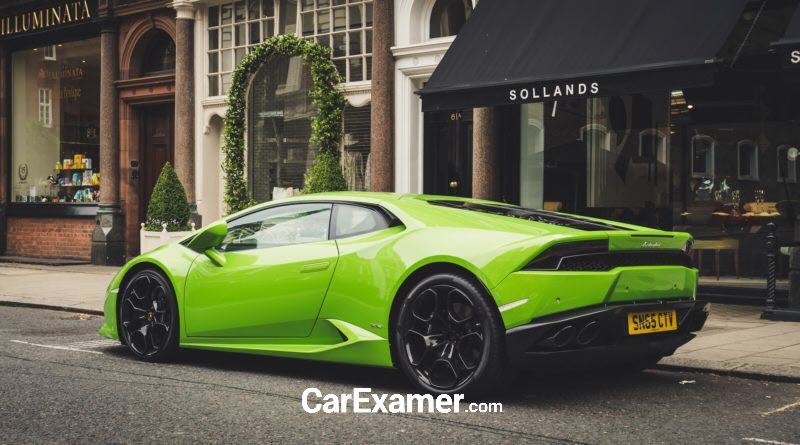
Why a Supercar Inspection Is Essential Before Buying
Buying a supercar or high-performance vehicle is often the result of years of ambition, saving, and passion. For many buyers, it represents far more than simple transport. It is a personal achievement, an investment, and a source of pride. Whether the goal is performance, exclusivity, driving enjoyment, or long-term ownership, the decision to buy a supercar is rarely taken lightly. However, supercars and performance vehicles also represent some of the highest-risk purchases in the used vehicle market. Their complexity, value, performance capabilities, and often unknown usage history mean that buying without a thorough inspection can expose buyers to serious financial, mechanical, and safety risks. A professional supercar inspection exists to reduce these risks by verifying condition, identifying hidden issues, and confirming that the vehicle is exactly what it claims to be.
Why Supercars Carry Higher Risk Than Standard Cars
Supercars are engineered to deliver extreme performance. High-output engines, advanced transmissions, sophisticated suspension systems, carbon-ceramic brakes, and complex electronics are all designed to operate at the edge of mechanical tolerance. While this engineering is impressive, it also means that wear, misuse, or incorrect maintenance can have serious consequences. Even relatively minor faults on a supercar can result in repair costs far beyond those associated with standard vehicles. In addition, many supercars are driven hard, modified, tracked, or stored incorrectly. Some have incomplete service histories, undocumented repairs, or modifications that may not meet manufacturer specifications. These factors significantly increase purchase risk.
The Purpose of a Supercar Inspection
A supercar inspection is not simply a more expensive version of a standard car inspection. It is a specialised process designed to assess performance vehicles in a way that reflects their complexity, value, and intended use.
The purpose of a supercar inspection is to:
- Verify the vehicle’s true mechanical and structural condition
- Identify existing faults and early signs of future failure
- Assess the quality and safety of any modifications
- Confirm authenticity and specification
- Evaluate suitability for intended use
- Protect the buyer from hidden financial risk
For high-value vehicles, even a single overlooked issue can result in substantial losses.
Protecting a Major Financial Investment
Supercars are rarely impulse purchases. Even when bought for enjoyment, they represent a significant financial commitment. Repair costs, depreciation, insurance, and maintenance must all be considered alongside the purchase price. A professional inspection ensures that buyers are not unknowingly purchasing a vehicle that requires immediate or unavoidable expenditure. It also confirms whether the asking price accurately reflects the vehicle’s condition. In many cases, inspections identify issues that allow buyers to renegotiate price, request corrective work, or walk away entirely. Any one of these outcomes can protect tens of thousands of pounds.
Legitimacy and Transparency
One of the most important roles of a supercar inspection is verifying legitimacy. This includes confirming that the vehicle’s condition, specification, and history match what is being advertised. Performance vehicles may have undergone cosmetic repairs, mechanical modifications, or component replacements that are not always disclosed. Some may have been involved in accidents, track use, or extensive modification without adequate documentation. An inspection provides an independent assessment that confirms whether the vehicle is being represented honestly. This transparency is essential when purchasing a vehicle where trust alone is insufficient.
Peace of Mind Before Purchase
Beyond financial protection, peace of mind is a significant benefit of a supercar inspection. Buying a high-performance vehicle without certainty can be stressful, particularly for buyers who do not have specialist mechanical knowledge. A professional inspection replaces uncertainty with evidence. Buyers understand what they are purchasing, what risks exist, and what maintenance or repairs may be required. This clarity allows decisions to be made confidently rather than emotionally. Peace of mind is especially valuable when purchasing rare or complex vehicles where information is limited.
Assessing Modifications and Enhancements
Many supercars and performance vehicles are modified. Modifications may include engine tuning, exhaust systems, suspension upgrades, braking enhancements, or cosmetic changes. While some modifications improve performance or reliability, others can introduce safety risks, reduce durability, or invalidate warranties and insurance. Poorly executed modifications are particularly dangerous on high-performance vehicles. A supercar inspection evaluates whether modifications have been carried out professionally, whether they are appropriate for the vehicle, and whether they introduce mechanical or structural concerns. The inspection also confirms whether modifications match what has been advertised, protecting buyers from misrepresentation.
Verifying Mechanical Integrity Under Load
Static inspections alone are insufficient for supercars. Many issues only appear when the vehicle is driven under load, heat, and operating pressure.
A comprehensive inspection assesses:
- Engine performance and response
- Transmission behaviour and shift quality
- Clutch operation and wear
- Differential performance
- Cooling system efficiency
- Suspension behaviour
- Steering accuracy
- Brake performance
These systems are critical on supercars and are expensive to repair if faults are discovered after purchase.
Identifying Wear From Performance Use
Supercars are often driven differently from standard vehicles. Track use, aggressive driving, repeated high-speed operation, and rapid acceleration all accelerate wear.
An inspection can identify signs of excessive wear such as:
- Heat damage
- Brake system fatigue
- Suspension stress
- Drivetrain wear
- Tyre degradation patterns
Recognising these signs allows buyers to understand how the vehicle has been used and whether that usage aligns with their expectations.
Evaluating Advanced Electronics and Systems
Modern supercars rely heavily on electronic systems. Engine management, traction control, adaptive suspension, gearbox control units, driver assistance systems, and infotainment systems all interact continuously. Electrical faults can be difficult to diagnose and extremely costly to repair. A supercar inspection includes checks for warning codes, system errors, abnormal behaviour, and signs of previous electrical intervention. Ensuring electronic systems operate correctly is essential for both performance and safety.
Confirming Structural Integrity
Structural integrity is critical on supercars, particularly those constructed with aluminium, carbon fibre, or composite materials.
An inspection assesses:
- Chassis alignment
- Structural repairs
- Signs of accident damage
- Panel fitment
- Underbody condition
Structural issues may not be visible externally but can significantly affect safety, handling, and long-term value.
Understanding Vehicle History and Provenance
History is particularly important for supercars. Provenance, ownership records, service history, and usage patterns all influence value and desirability. An inspection reviews available documentation to identify gaps, inconsistencies, or warning signs. While paperwork alone cannot guarantee condition, inconsistencies may indicate higher risk. Understanding a vehicle’s background helps buyers assess whether it has been maintained to appropriate standards. Buyers responsibility to run through vehicle history check which provides valuable insight into due diligence finance issues, insurance write off, imported or exported, scrapped before, stolen recovered.
Supporting Intelligent Negotiation
An inspection report provides objective evidence that can be used during negotiations. When issues are identified, buyers can make informed requests for repairs, price adjustments, or contractual conditions. This evidence-based approach protects buyers from overpaying and ensures that negotiations are grounded in facts rather than opinion.
Avoiding High-Risk Sellers
Most reputable sellers accept independent inspections. Resistance or refusal without valid explanation can indicate undisclosed issues. A willingness to allow inspection often reflects transparency and confidence in the vehicle. Identifying seller behaviour early helps buyers avoid risky transactions before financial commitment.
Long-Term Ownership Considerations
Supercar ownership does not end at purchase. Maintenance, reliability, running costs, and resale value all depend on the vehicle’s condition at the time of purchase. An inspection helps buyers plan ownership realistically by identifying potential future costs and maintenance requirements. This allows buyers to decide whether the vehicle aligns with their long-term expectations and budget.
Why Supercar Inspections Are Not an Optional Extra
Some buyers view inspections as an unnecessary cost. In reality, inspections function as financial protection against one of the highest-risk vehicle purchases possible. The cost of an inspection is small compared to the potential cost of engine repairs, transmission failure, structural issues, or unresolved electrical faults. For supercars, inspections are not optional extras. They are a necessary part of responsible purchasing.
Summary
Buying a supercar is a major decision that combines passion, performance, and significant financial commitment. While these vehicles deliver extraordinary experiences, they also carry elevated risks due to their complexity, value, and potential history. A professional car inspection protects buyers by verifying condition, identifying hidden issues, assessing modifications, and confirming authenticity. It provides clarity, reduces uncertainty, and supports informed decision-making. For anyone considering the purchase of a supercar or high-performance vehicle, a comprehensive inspection is one of the most important steps in protecting both investment and enjoyment.
FAQs
Why is a supercar inspection important before buying?
A supercar inspection is important because these vehicles are complex, expensive to repair, and often carry hidden risks. A professional inspection helps confirm the vehicle’s condition, highlights faults, checks for accident damage or poor repairs, and reduces the chance of buying a car with serious financial or mechanical problems.
What does a supercar inspection usually include?
A proper supercar inspection usually includes checks on the engine, gearbox, clutch, suspension, brakes, tyres, steering, cooling system, structural condition, electronics, diagnostic fault codes, modifications, and service history. It also helps verify whether the car matches the seller’s description.
Can a supercar look perfect but still have serious issues?
Yes. A supercar can look excellent cosmetically while still having major mechanical, structural, or electronic faults. Problems such as accident repairs, overheating, drivetrain wear, suspension damage, and software faults are not always visible during a simple viewing.
Do I still need an inspection if the seller seems reputable?
Yes. Even when the seller appears honest and professional, an independent inspection is still essential. It provides an objective assessment of the vehicle and protects the buyer from hidden issues, unexpected repair costs, or incomplete information.
Why are supercar repairs so expensive?
Supercar repairs are expensive because these vehicles use highly specialised components, advanced engineering, and performance-focused systems. Labour costs can also be higher because repairs often require specialist knowledge, specialist tooling, and manufacturer-level expertise.
Can a supercar inspection identify track use or hard driving?
In many cases, yes. An experienced inspector can often identify signs of heavy performance use, such as brake wear, tyre wear patterns, suspension stress, heat-related damage, and clutch or drivetrain fatigue. While not every detail of past use can be confirmed, inspection evidence can reveal whether the car has likely been driven aggressively.
Are modifications always a bad sign on a supercar?
Not always. Some modifications are high quality and professionally installed, while others can reduce reliability, safety, insurability, or future resale value. An inspection helps determine whether modifications have been carried out correctly and whether they are appropriate for the vehicle.
What risks does a supercar inspection help reduce?
A supercar inspection helps reduce the risk of buying a vehicle with hidden faults, accident damage, poor repairs, unsafe modifications, unreliable electronics, missing history, or structural problems. It also helps reduce the risk of overpaying.
Should I get a vehicle history check as well as an inspection?
Yes. A physical inspection and a vehicle history check should both be part of the buying process. A history check can reveal finance issues, insurance write off records, theft markers, import or export status, and whether the vehicle has previously been scrapped or stolen and recovered.
Can an inspection help with negotiating the price?
Yes. A detailed inspection report gives the buyer evidence to support price negotiations, repair requests, or a decision to walk away. This can save a substantial amount of money, especially on high-value performance vehicles.
Is a supercar inspection worth the cost?
Yes. The cost of an inspection is small compared with the potential cost of engine damage, gearbox issues, structural repairs, electronic failures, or undisclosed faults. For most buyers, it is a sensible and necessary part of the purchase process.
When should the inspection be done?
The inspection should be completed before any final payment is made or any binding commitment is agreed. It is best carried out once the vehicle has passed the buyer’s initial interest stage but before the sale is completed.
-
A Guide to different Types of Tyres and Tread
Tyres are one of the most critical components of any vehicle, yet they are often overlooked when it comes to