Car Problems Found During Inspection by CarExamer inspectors
Estimated reading time: 6 minutes
Buying a used car can feel straightforward on the surface. The bodywork might shine, the engine may start cleanly, and the seller may assure you everything is in excellent condition. However, professional vehicle inspections consistently reveal that what looks good externally does not always reflect the true mechanical or structural condition underneath. During inspections carried out across the UK, several patterns repeatedly emerge. The most significant issues are often not visible to the average consumer. Many are hidden within electronic systems, masked by temporary fault code deletions, or concealed beneath cosmetic preparation. This guide outlines the car problems during inspection – serious problems found during professional used car inspections, helping buyers understand where risks typically lie.
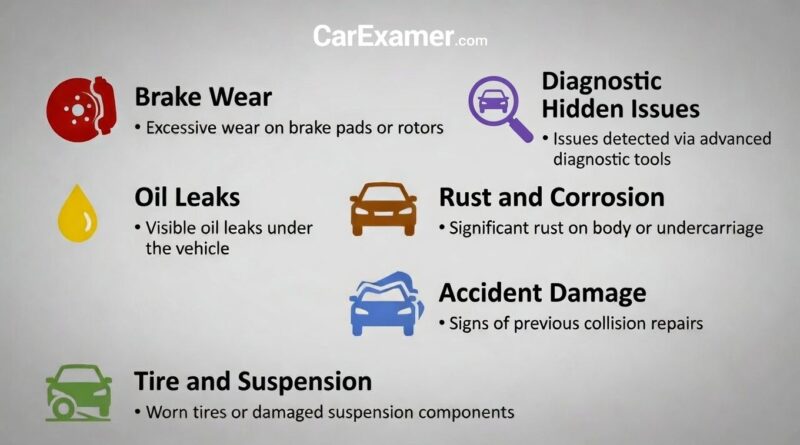
1. Hidden Diagnostic Fault Codes
One of the most significant car problems during inspection is the presence of stored or recently cleared diagnostic fault codes.
Modern vehicles rely heavily on electronic control units. These systems monitor engine performance, emissions, gearbox behaviour, suspension control, airbags and numerous other safety components. While warning lights may not be illuminated on the dashboard at the time of viewing, a professional diagnostic scan often reveals:
• Recently cleared fault codes
• Pending emission faults
• Intermittent sensor failures
• Air suspension system errors
• Module coding problems
• Turbocharger boost deviations
Many buyers assume that if no warning lights are visible, the vehicle is fault-free. In reality, fault codes can be cleared shortly before sale, masking serious underlying problems. Diagnostic scanning before and after a road test is one of the most effective ways to uncover these problems.
2. Deleted or Tampered Emission Systems
Emission system tampering has become increasingly common, particularly on diesel vehicles.
Common examples include:
• Diesel Particulate Filter (DPF) removal
• EGR valve deletion
• AdBlue system bypass
• ECU remapping to disable emission faults
These modifications are often carried out to avoid expensive repairs. However, driving a vehicle with deleted emission systems can be illegal and may lead to MOT failure, insurance complications and future repair costs.
Many of these modifications are not visible without specialist diagnostic equipment or detailed underbody inspection. Buyers frequently remain unaware until the next MOT or until performance problems appear.
3. Undisclosed Accident Damage
Accident damage is another recurring issue. While some repairs are declared and professionally carried out, others are poorly repaired and not disclosed to buyers.
Signs of previous accident damage often include:
• Inconsistent paint thickness readings
• Uneven panel gaps
• Mismatched paint finish
• Overspray on trims and seals
• Structural weld marks underneath
• Airbag faults
Paint depth measurement tools frequently reveal previous body repairs that are invisible to the naked eye. Structural damage repairs, if not carried out correctly, can compromise safety.
Buyers often assume that if a vehicle looks straight and clean, it has not been involved in an accident. Unfortunately, that assumption is not always safe.
4. Engine Knocking and Internal Mechanical Wear
Engine noise can be subtle. To an experienced inspector, abnormal knocking, tapping or rumbling sounds may indicate serious internal wear.
Common mechanical concerns include:
• Worn timing chains
• Big end bearing wear
• Piston slap
• Turbocharger bearing wear
• Hydraulic lifter noise
These car problems may not be obvious during a short test drive. In many cases, they only become apparent during cold starts or under load. Early-stage engine wear is often missed by inexperienced buyers.
If ignored, internal engine faults can escalate into complete engine failure.
5. Oil Leaks and Lubrication Problems
Oil-related problems remain one of the most common findings in used vehicles.
Typical inspection discoveries include:
• Oil leaks from rocker covers
• Sump gasket seepage
• Rear main seal leaks
• Turbo oil feed leaks
• Oil overfilled beyond safe limits
• Critically low oil levels
Overfilling oil can be just as harmful as running with too little. Excess oil can cause crankshaft aeration, seal failure and catalytic converter damage. Conversely, insufficient oil may indicate neglect and increases the risk of internal wear.
Buyers often do not check oil levels properly before purchase.
6. Coolant Leaks and Cooling System Problems
Cooling system faults frequently remain unnoticed until overheating occurs.
Common issues found during inspection include:
• Radiator leaks
• Perished coolant hoses
• Water pump seepage
• Head gasket pressure signs
• Coolant contamination
Overheating damage can lead to warped cylinder heads and costly engine repairs. Early detection through inspection can prevent significant financial loss.
7. Suspension and Steering Wear
Suspension faults are widespread, particularly in higher-mileage vehicles.
Inspectors regularly identify:
• Worn control arm bushes
• Leaking shock absorbers
• Air suspension compressor faults
• Damaged drop links
• Steering rack play
While some suspension wear is expected in older cars, excessive wear impacts safety, handling and tyre life. Many buyers only notice suspension issues after purchase.
8. Timing Belts Not Replaced
Timing belt replacement schedules are critical. Failure to replace a timing belt at the recommended interval can result in catastrophic engine damage.
Inspection reports frequently show:
• No evidence of timing belt replacement
• Service intervals exceeded
• Incorrect replacement parts fitted
Timing belt failure often destroys valves and pistons instantly. Verifying service history is essential.
9. Service Overdue or Incomplete Maintenance
Many vehicles are sold shortly before major services become due.
Common findings include:
• Service intervals exceeded
• Brake discs below minimum thickness
• Clutch nearing end of life
• Battery 12v and High Voltage battery Health deterioration (conventional cars and electrical cars)
• Tyres below safe tread margins
A car may drive acceptably during viewing but still require substantial expenditure within months.
10. Mileage Discrepancies and Suspicious Records
Mileage irregularities occasionally surface during car inspection very rare we must admit. While not always deliberate fraud, inconsistencies between service history, MOT records and diagnostic data can indicate manipulation more human error from MOT testers and DVLA.
Mileage discrepancies affect value, reliability expectations and resale potential.
Why These Issues Matter
Used cars are complex technically. Many faults do not present obvious symptoms during a short viewing or brief test drive. Diagnostic systems, underbody inspections and mechanical assessments require training and equipment beyond what most buyers possess.
Identifying these risks before purchase protects buyers from:
• Immediate repair bills
• MOT failures
• Warranty disputes
• Insurance complications
• Safety hazards
A professional inspection does not guarantee perfection, but it significantly reduces risk exposure.
Key Takeaway
The most serious car problems during inspection are rarely cosmetic. They are typically electronic, structural or mechanical in nature and often hidden from ordinary consumers.
Understanding these risks allows buyers to approach used car purchases with greater awareness. A thorough inspection before committing to purchase can provide clarity, negotiation leverage and long-term peace of mind.
FAQs
1. What are the most common car problems during inspection?
Common hidden problems include stored diagnostic fault codes, deleted emission systems, undisclosed accident damage, engine knocking, oil leaks, coolant leaks and suspension wear. Many of these issues are not visible during a basic viewing.
2. Can a diagnostic scan reveal problems not shown on the dashboard?
Yes. A professional diagnostic scan can detect stored, pending or recently cleared fault codes even when no warning lights are displayed, helping identify hidden mechanical or electronic issues.
3. How can buyers detect previous accident damage?
Previous accident damage can often be identified through paint thickness measurement, panel gap assessment, structural inspection and examination of airbag systems. Cosmetic repairs may conceal structural issues.
4. Why is checking service history important when buying a used car?
Service history confirms whether critical maintenance such as timing belt replacement and fluid changes has been completed. Missing or overdue servicing increases the risk of major mechanical failure.