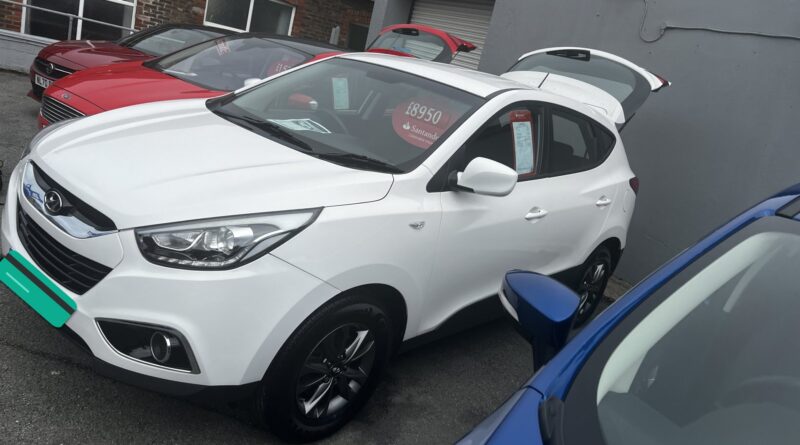
Why is it important to check a used Hyundai before buying
Estimated reading time: 5 minutes
Buying a used Hyundai can be a smart and cost-effective decision. Hyundai has built a strong reputation for reliability, fuel efficiency, and value for money, making it one of the most popular choices in the UK used car market. However, no used vehicle is completely risk-free. A thorough Hyundai inspection check is essential to understand the true condition of the car and avoid unexpected repair costs. This guide explains how to inspect a used Hyundai properly and also breaks down what is written on your tyres, an often overlooked but critical part of vehicle safety.
Why Choose a Used Hyundai?
Hyundai vehicles are known for combining affordability with strong build quality. Models such as the i10, i20, Tucson, and Santa Fe offer practical ownership with relatively low running costs.
Key advantages include:
Strong reliability record
Good fuel efficiency across petrol, diesel, and hybrid models
Affordable servicing and parts compared to premium brands
Modern safety features even on older models
Long manufacturer warranty on many vehicles
Despite these benefits, condition still depends heavily on how the car has been maintained.
Why a Pre Purchase Inspection Matters
Even a well-maintained Hyundai can have hidden issues. A proper inspection allows you to:
Identify mechanical or electrical faults
Detect accident damage or poor repairs
Confirm servicing and maintenance standards
Understand future repair costs
Negotiate a fair purchase price
Skipping this step increases the risk of buying a vehicle with underlying problems.
Vehicle History and Documentation
Start with a full background check before inspecting the car physically.
You should verify:
Vehicle Identification Number matches documents
Full service history and maintenance records
MOT history and mileage consistency
Any accident or insurance damage
Number of previous owners
A clean and consistent history is a strong indicator of proper ownership.
Engine and Transmission Inspection
The engine is the most important component of any vehicle.
Check for:
Smooth cold start and idle
No knocking, rattling, or excessive vibration
No oil or coolant leaks
Clean engine bay without signs of neglect
Correct fluid levels and condition
The transmission should:
Shift smoothly without hesitation
Engage gears cleanly
Show no warning lights
Hyundai automatic gearboxes and dual-clutch systems should feel responsive and consistent.
Suspension, Steering, and Brakes
These systems directly affect safety and driving comfort.
Check:
Suspension for knocks, leaks, or uneven ride height
Steering for smooth response and no excessive play
Brakes for strong, even stopping power
Brake discs and pads for wear
Uneven tyre wear often points to suspension or alignment issues.
Electrical and Interior Systems
Modern Hyundai vehicles include a wide range of electronics.
Test:
Dashboard warning lights
Infotainment system
Air conditioning and heating
Windows, mirrors, and central locking
Parking sensors and cameras
Inside the car, check:
Seat wear and upholstery condition
Dashboard and trim quality
Signs of damp or water ingress
Interior condition often reflects overall care.
Exterior and Body Condition
The exterior provides clues about the car’s history.
Inspect:
Paint consistency across panels
Panel alignment and gaps
Signs of respraying or accident repair
Rust, especially around wheel arches and sills
Condition of lights, glass, and trim
Poor repairs can indicate deeper structural issues.
Undercarriage Inspection
If possible, check underneath the vehicle.
Look for:
Rust or corrosion
Fluid leaks
Exhaust condition
Damage to protective panels
The underbody often reveals problems not visible from above.
Road Test Evaluation
A test drive is essential.
During the drive, assess:
Engine performance and acceleration
Gearbox behaviour
Steering stability
Brake performance
Noise, vibration, or warning lights
A used Hyundai should feel smooth, quiet, and predictable.
What’s Written on Your Tyres Explained

4
Understanding tyre markings helps ensure safety, compliance, and correct performance.
Example Tyre Code: 205/55 R16 91V
205 – Tyre width in millimetres
55 – Sidewall height as a percentage of width
R – Radial construction
16 – Wheel diameter in inches
91 – Load index (maximum weight capacity)
V – Speed rating
Additional Tyre Information
DOT Code
Shows manufacturing date, for example 2522 means week 25 of 2022
Tread Depth
Legal minimum in the UK is 1.6mm
Directional Arrow
Indicates correct rotation direction
XL Marking
Extra load capacity tyre
Why Tyres Matter When Buying a Used Hyundai
Incorrect or worn tyres can:
Affect braking distance
Reduce fuel efficiency
Impact handling and safety
Lead to MOT failure
Potentially affect insurance claims
Always ensure tyres match manufacturer specifications.
Professional Inspection Recommendation
While basic checks can be done yourself, a professional inspection provides deeper insight.
A specialist inspection can:
Use diagnostic tools to detect hidden faults
Identify early signs of wear or failure
Provide a detailed report with evidence
Support price negotiation
This is particularly useful if you are unsure or buying remotely.
Final Thoughts
A used Hyundai can offer excellent value and reliable ownership, but only if it has been properly maintained and thoroughly inspected. By checking the vehicle’s history, mechanical condition, electronics, tyres, and road performance, you significantly reduce risk and improve your buying decision. A careful inspection today can prevent costly repairs tomorrow.
FAQs
What does a Hyundai pre purchase inspection include?
It includes checks of the engine, transmission, suspension, brakes, electrical systems, interior, exterior, tyres, undercarriage, and a road test, along with vehicle history review.
Is a pre purchase inspection necessary for a used Hyundai?
Yes, it helps identify hidden issues and ensures the vehicle has been properly maintained before purchase.
How much does a Hyundai pre purchase inspection cost in the UK?
It typically costs between £150 and £400 depending on the inspection level and diagnostics included.
What are common problems in used Hyundai cars?
Common issues include suspension wear, brake wear, battery faults, clutch wear, and general wear from high mileage.
What do tyre markings mean on a Hyundai?
Tyre markings show size, load index, speed rating, and construction type, which are essential for safety and performance.
How do I check if tyres are legal in the UK?
Tyres must have at least 1.6mm tread depth and be free from damage or defects.
Can inspection results help negotiate price?
Yes, identified faults can be used to reduce the purchase price or request repairs.
What happens if I skip a Hyundai inspection?
You risk buying a vehicle with hidden faults, leading to unexpected repair costs.