5 Important Car Documents You Must Protect to Stay Safe
Estimated reading time: 6 minutes
When it comes to driving in the UK, there is more to responsibility than simply knowing the Highway Code. You must understand your car, maintain it properly and, just as importantly, keep your documentation organised and up to date. Car documents are not just paperwork. They prove your legal right to drive, confirm your vehicle’s compliance and protect you financially if something goes wrong. Losing or neglecting them can result in fines, delays in selling your vehicle, insurance complications or even legal trouble.
You do not need to carry every document in your glove box at all times, but you must know where they are, ensure they are up to date and protect them from damage or loss.
Here are the five most important car documents you need to protect, and why they matter.
1. Driving Licence
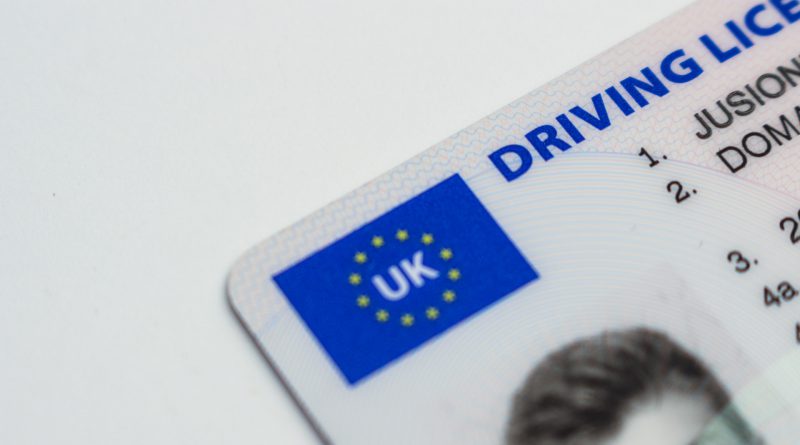
Your driving licence is the most fundamental document of all. Without it, you are not legally permitted to drive.
Why your driving licence is essential
It proves:
Your identity
Your entitlement to drive
Which vehicle categories you are licensed for
Your current address
If stopped by police and you do not have your licence with you, you may be given a short period to produce it at a police station. However, repeated failure to maintain valid licence details can result in penalties.
Common mistakes drivers make
Not updating address after moving home
Letting licence expire
Failing to renew photo card every 10 years
Ignoring medical reporting obligations
Driving with an outdated address on your licence can result in a fine of up to £1,000.
How to protect it
Keep your licence secure in your wallet or safe location.
Renew it before expiry.
Update details immediately if you move house.
Store digital copies securely as backup.
Your licence is both a legal requirement and an important identity document.
2. MOT Certificate and History
In the UK, vehicles over three years old require an annual MOT test to confirm roadworthiness. While physical MOT certificates are no longer required, the vehicle must have a valid MOT recorded in the DVLA system.
Why the MOT is critical
An MOT confirms your car meets minimum safety and environmental standards. Driving without a valid MOT can result in fines and invalidate your insurance.
What drivers often overlook
MOT advisories are warnings about future issues. Just because a vehicle passes does not mean it is fault free.
Common MOT advisories include:
Tyre wear
Brake wear
Suspension deterioration
Minor oil leaks
Ignoring advisories often leads to larger repair bills later.
How to protect this document
Keep digital records of MOT results.
Review advisories carefully.
Plan repairs proactively.
Never rely on verbal confirmation alone.
An up to date MOT protects both your safety and your legal standing.
3. V5C Logbook (Vehicle Registration Certificate)
The V5C logbook is one of the most important car documents in the UK. It confirms the registered keeper of the vehicle.
What the V5C actually proves
It confirms who is responsible for the vehicle in the eyes of the DVLA.
It contains vehicle details including VIN and registration.
It is required when selling or transferring ownership.
The V5C does not prove legal ownership, but it is essential for administrative purposes.
Why protecting it matters
If you lose your logbook, replacing it currently costs a fee.
If incorrect details are recorded, fines may apply.
Failure to update keeper details can cause complications with parking fines, speeding tickets and tax liability.
Key checks
Ensure the registered keeper details are correct.
Update the DVLA immediately after sale.
Store the logbook securely at home, not in the car.
Never hand over a vehicle without correctly transferring ownership via DVLA.
4. Insurance Documentation
Driving without insurance is illegal in the UK. While physical documents are no longer required to be carried, you must have valid cover in place at all times.
Why insurance documents matter
They confirm:
Policy number
Level of cover
Excess amounts
Named drivers
Policy expiry date
In the event of an accident, having access to your insurance details simplifies the claims process.
Common problems
Letting policies auto renew at inflated rates
Failing to declare modifications
Not updating address or job details
Driving outside of policy permissions
Incorrect or incomplete information can invalidate cover.
How to protect insurance documents
Store policy documents digitally.
Keep policy number accessible in your phone.
Review policy terms annually.
Update changes immediately.
Insurance protects you financially. Administrative accuracy protects your cover.
5. Service History and Maintenance Records
Although not legally required, service history is one of the most valuable car documents you can own.
Why service history matters
It demonstrates proper maintenance.
It increases resale value.
It provides evidence of timing belt or chain servicing.
It helps diagnose recurring issues.
A full service history can significantly increase buyer confidence when selling your vehicle.
What should be included
Stamped service book
Invoices for repairs
Parts replacement receipts
Timing belt replacement confirmation
Brake and suspension repairs
Vehicles with incomplete service records often sell for less.
How to protect service history
Keep all invoices organised chronologically.
Scan documents for digital backup.
Store physical copies in a waterproof folder.
Avoid losing maintenance receipts.
A well documented car is a valuable car.
Bonus Documents Worth Keeping Safe
While the five above are essential, other useful documents include:
Owner’s manual
Finance agreement documentation
Extended warranty contracts
Breakdown cover details
Spare key and key code information
These documents may not be required daily but can be vital when problems arise.
Should You Keep Car Documents in the Vehicle?
Some documents should never be left in the car, including:
V5C logbook
Finance agreements
If the vehicle is stolen, these documents can facilitate fraud.
It is reasonable to keep:
Insurance contact details
Breakdown assistance details
Emergency contact information
Balance accessibility with security.
Why Car Documents Matter When Buying Used
When purchasing a used vehicle, documentation is just as important as mechanical condition.
Always check:
Driving licence identity of seller
V5C details match seller
MOT history aligns with mileage
Service history is complete
Insurance write off checks are clear
If anything does not align, investigate before proceeding.
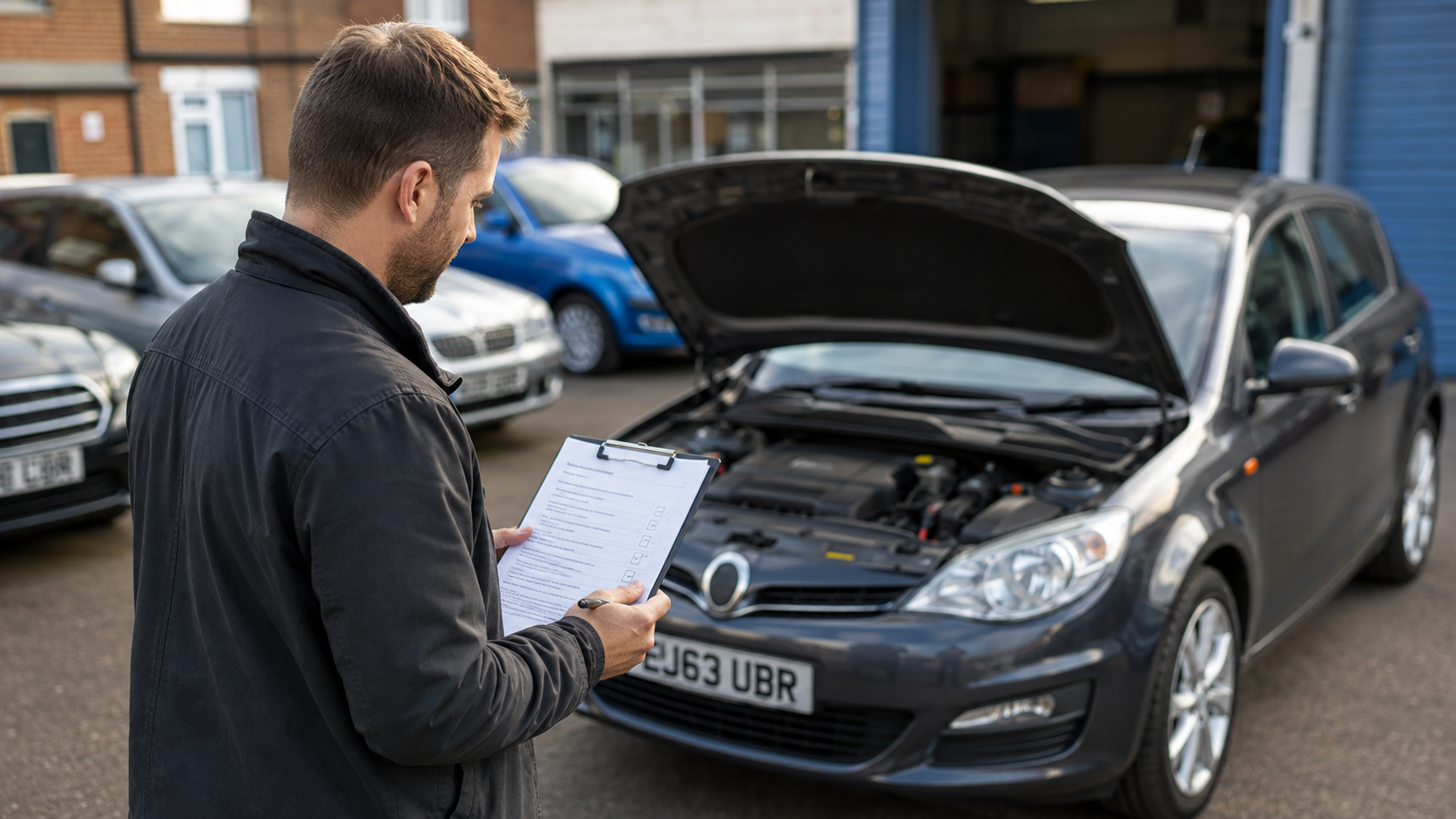
A professional pre purchase car inspection can verify both documentation consistency and mechanical condition.
Final Thoughts
Car ownership is not just about driving. It is about responsibility, legality and preparation.
Your driving licence, MOT record, V5C logbook, insurance documents and service history are essential to protect yourself legally and financially.
Keep them secure. Keep them updated. Review them regularly.
Being organised with your car documents is one of the simplest ways to avoid unnecessary stress and expense.
Safe driving begins with proper preparation.
Buying used is a smart way to save money – but only if you buy the right car. Take your time, inspect everything, and when in doubt, get a professional pre purchase car inspection.
Frequently Asked Questions
What are the most important car documents in the UK?
The most important car documents include your driving licence, V5C logbook, MOT record, insurance documents and service history records.
Do I need to carry my car documents while driving?
You must have a valid licence and insurance, but physical copies do not need to be carried at all times. However, details should be easily accessible.
Where should I store my V5C logbook?
The V5C should be stored securely at home, not kept in the vehicle, to prevent fraud if the car is stolen.
Is service history legally required?
No, but it significantly increases vehicle value and buyer confidence and helps verify proper maintenance.