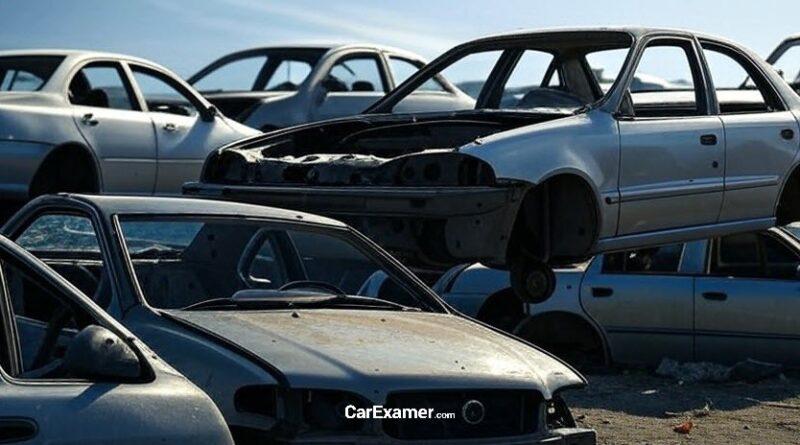
How to Scrap a Car in the UK Without the Stress
There comes a point in almost every vehicle’s life when another repair stops making financial sense.
As a vehicle inspector, I’ve seen cars reach this stage in very different ways. Sometimes it is an old car with corrosion, worn suspension, an oil leak and a gearbox problem all arriving at once. Sometimes it is an accident-damaged vehicle where the repair bill simply cannot be justified. In other cases, a car still moves under its own power, but the owner is facing several thousand pounds of expenditure on a vehicle worth considerably less.
That is when the question changes from “How much will it cost to repair?” to “Is it time to scrap it?”
Scrapping a car in the UK is relatively straightforward when it is done correctly. The problems tend to start when owners use questionable collectors, misunderstand the paperwork or fail to notify the DVLA properly.
Here’s what I would want any vehicle owner to know before sending a car on its final journey.
When Does Scrapping a Car Make Sense?
Age alone doesn’t determine whether a vehicle should be scrapped.
I’ve inspected old cars that remain mechanically sound and considerably newer vehicles where the repair economics simply don’t work.
What matters is the relationship between the vehicle’s value, its current condition and the amount required to make it safe and reliable.
Suppose a car is worth £1,500 in good condition but requires:
- £700 of suspension repairs
- £500 of tyres and brakes
- £800 of corrosion repairs
- £600 of engine work
Spending £2,600 on a £1,500 car may make little financial sense unless the vehicle has particular sentimental, practical or collectible value.
Before scrapping it, however, establish what is actually wrong.
A professional vehicle inspection can be worthwhile when you are uncertain whether a vehicle genuinely is beyond economical repair. What sounds like a catastrophic problem may occasionally be something relatively inexpensive, while apparently minor symptoms can sometimes reveal much larger problems.
Repair, Sell or Scrap?
Before making the final decision, compare three realistic options.
Repair it: If the car is fundamentally sound and repairs cost substantially less than replacing it, keeping it may still be sensible.
Sell it as a project or spares-or-repairs vehicle: Someone with the skills and facilities to repair the vehicle may value it above its scrap value.
Scrap it: If the vehicle has reached the end of its useful life and there is no realistic economic case for repair, responsible scrapping may be the best solution.
Don’t assume the first scrap quote represents the car’s maximum value.
Depending on the vehicle, salvageable components can affect what a dismantler is prepared to pay.
You Must Use an Authorised Treatment Facility
This is one of the most important parts of the process.
If your vehicle has reached the end of its useful life, GOV.UK says it must be scrapped at an authorised treatment facility, commonly called an ATF. It is illegal to scrap an end-of-life vehicle somewhere else.
An ATF is authorised to deal with end-of-life vehicles and the potentially hazardous materials they contain.
Cars contain far more than steel.
They can contain:
- Engine oil
- Gearbox oil
- Brake fluid
- Coolant
- Fuel
- Batteries
- Air-conditioning refrigerant
- Tyres
- Electronic components
These materials cannot simply be dumped.
End-of-life vehicles that have not been properly depolluted are treated as hazardous waste, which is one reason using an authorised facility matters environmentally as well as legally.
Check the Scrap Company Before Handing Over Your Car
Don’t choose a company solely because its website promises the highest price.
Check who is actually taking possession of your vehicle and where it is going.
Before agreeing to collection, ask:
- Is the vehicle going to an ATF?
- What is the facility’s name and address?
- Is collection included?
- Is the quoted price fixed?
- What could cause the price to change?
- How will payment be made?
- Will I receive the correct paperwork?
- If the vehicle is completely scrapped, will a Certificate of Destruction be issued?
Keep screenshots or emails showing the quotation and terms.
That creates a useful paper trail if there is a disagreement later.
What Documents Do You Need to Scrap a Car?
Your V5C registration certificate, commonly called the logbook, is the main vehicle document involved.
When scrapping a vehicle without retaining parts yourself, GOV.UK instructs owners to give the V5C to the ATF while keeping the yellow section relating to selling, transferring or part-exchanging the vehicle to the motor trade. You must also tell the DVLA that the vehicle has been taken to an ATF.
You may also be asked for identification.
Scrap metal businesses have legal record-keeping and identity-verification obligations, so don’t be surprised if the company wants to verify who you are.
What If You’ve Lost the V5C?
A missing V5C should not simply be ignored.
The exact procedure depends on what is happening to the vehicle. If a vehicle has been sold or transferred without a logbook, DVLA requires the former keeper to provide information including their name and address, registration number, make and model, exact date of sale and the details of the new keeper or motor trader.
If your paperwork is missing, speak to the ATF and check the current DVLA procedure before handing over the vehicle rather than guessing.
Remove a Private Registration Before Scrapping
This catches owners out.
If the car has a personalised registration that you want to retain, deal with it before the vehicle is scrapped.
GOV.UK specifically advises applying to take the registration number off the vehicle before scrapping if you want to keep it.
Do not wait until the car has been crushed and then assume the registration can easily be recovered.
How Scrap Car Valuation Works
A scrap vehicle’s value is influenced by several factors rather than one universal rate.
These can include:
- Vehicle weight
- Current scrap-metal values
- Make and model
- Location
- Collection costs
- Completeness of the vehicle
- Reusable components
- Catalytic converter type
- Demand for salvageable parts
This explains why two similarly sized vehicles can receive different offers.
Get several quotations where practical, but make sure you are comparing like with like. A £400 quote with free collection could be better than a £450 quotation followed by an unexpected £100 recovery charge.
Don’t Automatically Remove Valuable Parts
Owners sometimes assume they will make more money by removing the battery, wheels, catalytic converter or other components before the vehicle is collected.
Be careful.
Removing valuable components can reduce the price an ATF is prepared to pay, and removing certain fluids or components incorrectly can create safety and environmental problems.
If you’re considering retaining parts, discuss this with the facility first and make sure you understand how it affects both the quotation and the scrapping process.
Prepare the Car for Collection
You don’t need to spend Sunday afternoon polishing a vehicle that is heading for dismantling.
You should, however, empty it thoroughly.
Check:
- Glovebox
- Door pockets
- Centre console
- Under the seats
- Boot
- Spare-wheel compartment
- Sunglasses holders
- Seat-back pockets
I’ve seen enough cars to know how much personal information can accumulate inside them.
Remove paperwork containing your address, bank information, old insurance certificates and anything else you wouldn’t want another person to find.
Also remove:
- House keys
- Garage remotes
- Parking permits
- Dashcams
- Phone holders
- Toll devices
- Personal tools
Once the vehicle has gone, retrieving something left inside may be impossible.
Photograph the Vehicle Before Collection
This is a simple step I recommend.
Take clear photographs showing:
- All four sides
- Registration number
- Interior
- Mileage
- Overall condition
- Vehicle being collected, if possible
Also record the date and details of the company collecting it.
These photographs are unlikely to be needed, but they give you evidence of the vehicle’s condition and handover if a dispute develops.
Can You Be Paid Cash for a Scrap Car?
This is another area where UK rules matter. If your vehicle is being scrapped in England or Wales, GOV.UK states that it is illegal for the ATF to pay you cash. Payment must instead be made by bank transfer or cheque the is many scrapping service providers too.
Government guidance under the Scrap Metal Dealers Act also explains that scrap-metal dealers cannot buy scrap metal for cash.
So if someone proposes turning up, taking an end-of-life vehicle away and paying a bundle of notes with no proper paperwork, that should immediately make you cautious.
What Is a Certificate of Destruction?
The Certificate of Destruction, or CoD, is one of the most important documents in the process.
If an ATF completely scraps a qualifying car, light van or relevant three-wheeled vehicle, it should issue a Certificate of Destruction within seven days.
The certificate proves that the vehicle has been handed over for destruction.
Keep it.
Without appropriate confirmation, you could potentially continue encountering problems associated with the vehicle, including tax or traffic-related matters.
The ATF uses the DVLA system to generate the Certificate of Destruction, which updates the vehicle record accordingly. Government environmental guidance recommends that the person receiving the certificate keeps it indefinitely.
There is an important exception. If the ATF decides to repair and resell the vehicle rather than completely scrap it, you will not receive a Certificate of Destruction.
That is why you should understand whether you are selling a vehicle to a salvage business or actually having it destroyed.
Tell the DVLA
Do not assume the scrap company has taken care of everything for you.
You must tell the DVLA that you’ve taken the vehicle to an authorised treatment facility. GOV.UK warns that failing to notify the DVLA can result in a fine of up to £1,000.
Once the DVLA is correctly notified, the vehicle tax is cancelled and you are entitled to a refund for any full months of remaining tax.
If you pay vehicle tax by Direct Debit, DVLA will cancel the Direct Debit after being told that the vehicle has been scrapped.
Keep the DVLA confirmation alongside your other records.
What About Insurance?
Once the vehicle has been collected and ownership or responsibility has been dealt with correctly, contact your insurer.
Don’t simply cancel insurance before the vehicle is collected if doing so could leave a vehicle that is still being kept or driven on a public road uninsured.
Tell the insurer exactly what has happened and the date the vehicle was transferred or scrapped.
Depending on your policy and payment arrangements, you may be entitled to a partial refund, although administration charges can apply.
What If the Insurance Company Has Written the Car Off?
Insurance write-offs follow a slightly different process.
If your insurer has written the vehicle off and is arranging for it to be scrapped, you still need to tell the DVLA.
GOV.UK explains that you should remove a personalised registration first if you intend to retain it, provide the appropriate V5C documentation to the insurer and notify DVLA that the vehicle has been written off.
If you retain a Category N or Category S vehicle after an insurance write-off, different procedures apply because the vehicle is not necessarily being destroyed.
Should You Scrap a Repairable Car?
Not necessarily.
This is where my inspector’s perspective becomes important.
A frightening noise doesn’t automatically mean the engine is finished. An illuminated warning light doesn’t automatically mean the vehicle should be scrapped.
Before disposing of an otherwise useful vehicle, establish the actual problem and compare:
Current vehicle value + realistic repair cost + expected remaining life
against:
Replacement vehicle purchase cost + immediate maintenance requirements + unknown future problems
Sometimes repairing the car you already know is financially smarter than buying another cheap used vehicle with a completely unknown history.
A proper vehicle inspection or diagnostic assessment can therefore be worthwhile before making an irreversible decision.
Environmental Benefits of Responsible Vehicle Recycling
Scrapping a car correctly is also an environmental process.
An ATF can depollute the vehicle, safely dealing with hazardous fluids and materials before recovering reusable components and recyclable materials.
Steel, aluminium and other metals can be recovered. Components suitable for reuse may enter the used-parts market rather than being discarded.
Responsible dismantling therefore reduces waste while ensuring potentially harmful substances are managed properly.
Your Stress-Free Scrap Car Checklist
Before the vehicle disappears on a recovery truck, work through this checklist:
- Decide whether repair, resale or scrapping makes the most financial sense
- Use an authorised treatment facility
- Compare legitimate quotations
- Confirm whether collection is included
- Remove a private registration you want to retain
- Find your V5C
- Remove all personal possessions
- Photograph the vehicle
- Record who collects it
- Use an appropriate traceable payment method
- Tell the DVLA
- Obtain and retain the Certificate of Destruction when applicable
- Deal with the remaining insurance
- Keep all confirmations and receipts
Ten minutes spent checking paperwork can prevent months of unnecessary problems later.
Final Thoughts
Scrapping a car should be the end of your responsibility for that vehicle, not the beginning of a paperwork nightmare. The process becomes much easier when you approach it methodically. First establish whether the car genuinely is beyond economical repair. If you’re uncertain, get the mechanical condition properly assessed rather than making the decision from guesswork. If scrapping is the right option, use an authorised treatment facility, understand the quotation, remove your belongings, keep evidence of the handover and complete the DVLA process correctly.
Most importantly, don’t treat the Certificate of Destruction and DVLA notification as minor administrative details. They are what help demonstrate that the vehicle has legitimately left your responsibility.
Do those things properly and scrapping an old car can be exactly what it should be: straightforward, final and stress-free.