


Ford Service Schedules Comprehensive Guide for 2024
Estimated reading time: 7 minutes
Maintaining a Ford vehicle in good condition relies on following the correct service schedule. Ford designs its service intervals to ensure reliability, safety, efficiency, and long-term durability. Whether you own a brand-new Ford or are buying a used model, understanding Ford service schedules is essential to avoid unnecessary repairs, protect resale value, and ensure the vehicle continues to perform as intended.
Ford service schedules apply across the full range of passenger cars and commercial vehicles, but intervals and requirements can vary depending on model, engine type, fuel type, age, and usage. This guide explains Ford service schedules for 2024 in clear UK English, covering interim services, annual inspections, main services, corrosion protection checks, and what buyers of used Ford vehicles need to know.
Why Ford Service Schedules Matter
Ford vehicles are engineered with specific maintenance requirements based on real-world usage, engine tolerances, and component wear. Servicing is not just about oil changes. It includes inspections, software updates, safety checks, and preventative maintenance designed to catch issues before they become expensive failures.
Skipping services or delaying maintenance can lead to increased wear, reduced fuel efficiency, emissions issues, and premature component failure. For used vehicles, incomplete service history can also affect value and buyer confidence.
Understanding Ford Service Intervals
Ford service schedules are generally based on mileage or time, whichever occurs first. This approach ensures that vehicles used infrequently still receive essential checks, while high-mileage vehicles receive maintenance often enough to match wear levels.
Ford typically uses three core service types: Interim Service, Annual Inspection, and Main Service. These are designed to work together rather than replace one another.
Interim Service Explained
An Interim Service is carried out between scheduled main services. It focuses on key safety-critical and wear-related components.
Typical Interim Service checks include engine oil and filter replacement, fluid level checks, brake inspection, tyre condition and pressures, steering and suspension checks, exterior lighting inspection, and dashboard warning light review.
Interim services are particularly important for vehicles covering high annual mileage, urban driving, or stop-start use, which is common in many Ford models used for commuting or commercial work.
Annual Inspection Explained
The Annual Inspection is a comprehensive yearly check designed to assess the overall condition of the vehicle. It is not always a full service, but it plays a vital role in identifying emerging issues early.
Annual inspections typically include safety system checks, electronic diagnostics, braking system assessment, suspension and steering review, fluid condition checks, exhaust inspection, and body condition assessment.
Even when mileage is low, the annual inspection ensures that time-related wear, corrosion, and deterioration are identified.
Main Service Explained
The Main Service is the most comprehensive level of routine maintenance. Depending on the model and engine, it is usually scheduled every one or two years.
A main service includes engine oil and filter replacement, air and cabin filter replacement, detailed braking inspection, drivetrain checks, suspension inspection, cooling system assessment, and electronic system diagnostics.
Main services are essential for maintaining engine health, emissions compliance, and manufacturer reliability standards.
One-Year and Two-Year Service Cycles
Ford vehicles may operate on either one-year or two-year service cycles depending on model and engine specification.
One-year service schedules require servicing every 12 months regardless of mileage. Two-year schedules allow for servicing every 24 months, but interim services and annual inspections still apply.
It is important to follow the correct schedule for your specific vehicle rather than assuming all Fords share the same intervals.
Corrosion Protection Checks Explained
Ford includes corrosion protection checks as part of its long-term vehicle care strategy. These inspections are critical for body longevity and warranty considerations.
For all passenger cars and Transit vehicles up to model year 12/2005, corrosion protection checks are required every 12 months.
For Maverick and Ranger models up to model year 04/2011, checks are also required every 12 months.
For all passenger cars and Transit vehicles from model year 01/2006 and Ranger models from model year 05/2011, corrosion checks are required every 24 months until the sixth year, after which they revert to annual checks.
Failure to follow corrosion inspection schedules can affect long-term rust protection and resale value.
Fuel Type and Engine Variations
Ford service schedules may vary depending on fuel type. Vehicles using flexi-fuel systems, LPG, CNG, or bio-ethanol may require additional checks or modified service intervals.
Hybrid and electrified Ford models also have different maintenance requirements, focusing more on software updates, cooling systems, braking condition, and high-voltage safety checks rather than traditional engine servicing.
Service Schedules and Used Ford Vehicles
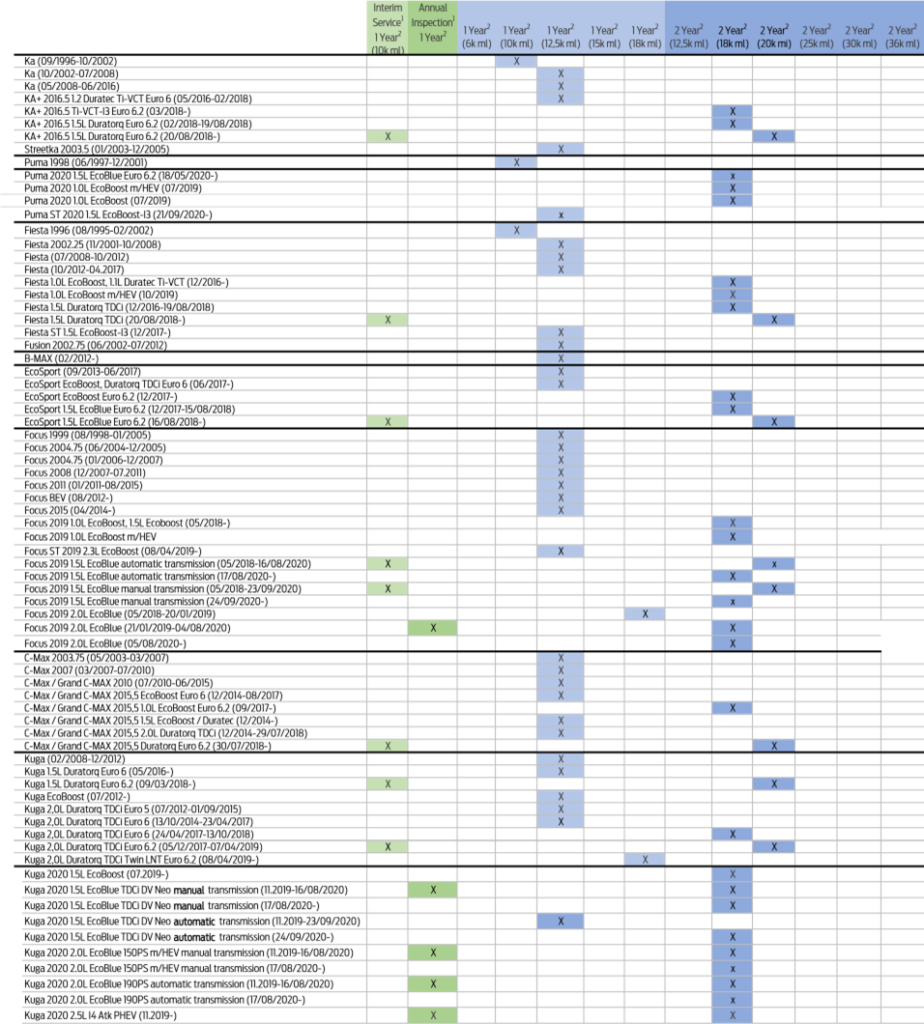
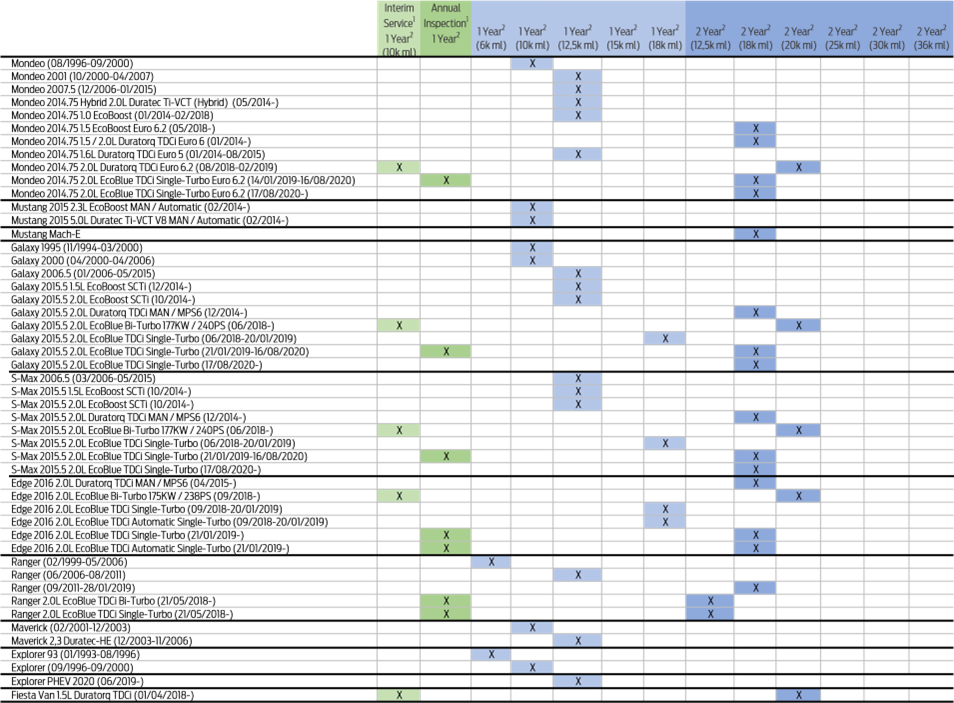
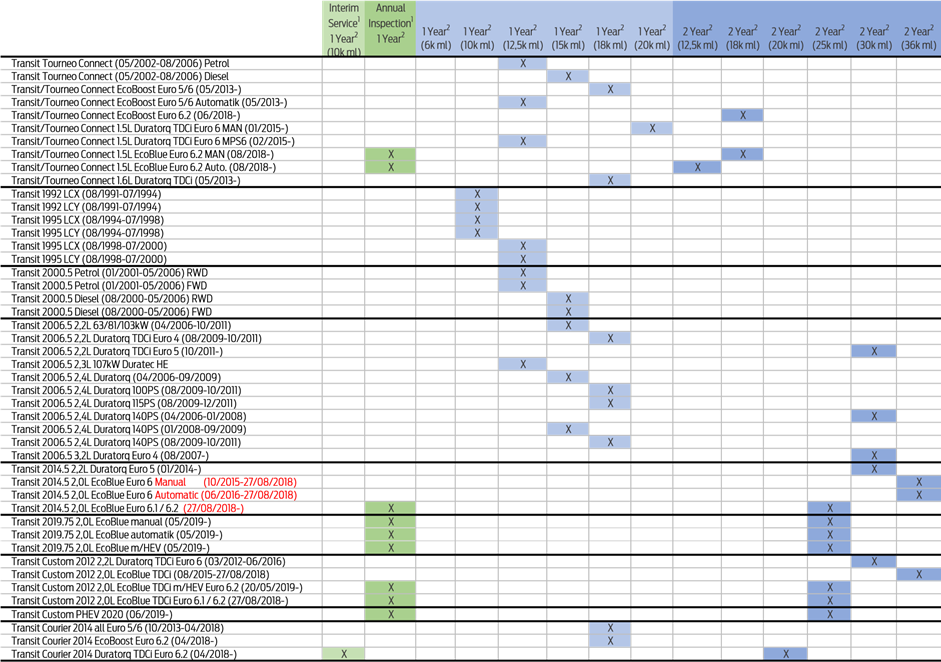
When buying a used Ford, understanding the service schedule is critical. A full service history should show consistent adherence to Ford-recommended intervals rather than irregular or delayed servicing.
Missing services can indicate neglect, cost-cutting, or potential mechanical issues. Buyers should check whether interim services and annual inspections were carried out alongside main services, not just headline service stamps.
Service History and Mileage Accuracy
Service records often include mileage entries. Inconsistent mileage progression can indicate potential issues such as missed services or inaccurate odometer readings.
While service history alone does not confirm mileage accuracy, it forms an important part of the overall assessment when buying a used Ford.
Independent Servicing vs Ford Main Dealer
Many Ford vehicles are serviced outside main dealer networks, especially once out of warranty. Independent servicing is acceptable provided it follows Ford specifications and uses correct parts and fluids.
Buyers should look for evidence that independent services matched Ford intervals and service requirements rather than generic oil changes.
Why Skipping Services Is Risky
Modern Ford engines rely on precise lubrication, emissions systems, and electronic controls. Delayed oil changes, missed inspections, or ignored warning signs can lead to issues such as timing chain wear, turbocharger failure, injector problems, and emissions faults.
Regular servicing reduces the risk of unexpected breakdowns and expensive repairs.
Digital Service Records and Modern Ford Vehicles
Many newer Ford vehicles use digital service records rather than paper service books. Buyers should ensure digital records are accessible and complete.
Incomplete digital records can be as problematic as missing paperwork.
Practical Advice for Ford Owners in 2024
Owners should follow the service schedule specified for their exact model and engine rather than relying on general advice. Annual inspections should not be skipped even if mileage is low.
Keeping records organised and retaining invoices alongside digital records adds further credibility when selling the vehicle.
Final Thoughts on Ford Service Schedules
Ford service schedules are designed to protect vehicle reliability, safety, and long-term value. Understanding interim services, annual inspections, main services, and corrosion protection checks helps owners and buyers make informed decisions.
Whether maintaining your current Ford or assessing a used purchase, following the correct service schedule is one of the most effective ways to reduce risk and control ownership costs.
FAQs
What is a Ford service schedule
A Ford service schedule outlines when a vehicle should receive interim services, annual inspections, main services, and corrosion protection checks based on time and mileage.
How often should a Ford be serviced
Most Ford vehicles require servicing annually or every two years, with interim services and inspections in between depending on usage.
What is included in a Ford interim service
An interim service includes oil and filter changes, safety checks, fluid inspections, and basic mechanical assessments.
Do Ford corrosion checks matter
Yes. Corrosion protection checks are required at specific intervals and help maintain body integrity and long-term value.
Is full service history important when buying a used Ford
Yes. Consistent servicing according to Ford schedules significantly reduces risk and increases buyer confidence.
Can independent garages service Ford vehicles
Yes, provided they follow Ford specifications and service intervals and use appropriate parts and fluids.