How to Find the Cheapest Used Cars to Buy and Run
Estimated reading time: 8 minutes
The cheapest car to buy and run is the one that meets your needs for the lowest realistic total cost. For short journeys, it is worth comparing small petrol hatchbacks such as the Toyota Aygo and Volkswagen up!. For regular motorway use or carrying four adults, include a larger hatchback and see whether the difference in fuel and insurance is worth paying. Check the actual vehicle before assuming one model will always cost less.
Make a shortlist of cars you could buy now, then get insurance quotes, check vehicle tax and price work that is due. A car with a higher asking price can still be the cheaper option if its records show the major service and tyres have just been done.
Build a shortlist around the journeys you make
Start with your usual mileage, passenger needs, parking and where you drive. A small city car can be a good starting point if you mainly drive alone on local roads and park in tight spaces. If your regular route includes fast roads, test the car at normal traffic speeds where safe. Check whether its seating, driving position and noise levels suit a journey you would make every week.
- For short, low-mileage use, compare small petrol cars with tyres and parts available locally. Get the insurance quote before viewing.
- For frequent urban journeys, include a hybrid if the purchase price and insurance fit your budget. Request the model-specific maintenance records and check whether the seller can provide a battery health result.
- For frequent motorway trips, compare a larger hatchback with a city car. Include a diesel only if its condition, use history and emissions-zone status make sense for your routes.
- For an electric alternative, check access to reliable charging and what you would pay at each site. Use our electric car ownership cost guide to estimate charging, tax and battery-related checks.
Think ahead to a change in your commute or parking. If your numbers only work with free charging at work or with no trips into a charging zone, rerun them with a realistic backup once you know the registration.
Compare these used small-car options
A second-generation Toyota Aygo 1.0 petrol is a starting point if you want a compact city car. Toyota’s UK model archive covers that generation and its engine. The What Car? value award for the Aygo x-play is a historical reference from 2020. Use current quotes for the car in front of you. If you need an automatic, establish what gearbox the seller is offering and try it in low-speed manoeuvres before deciding whether its response suits you.
A Volkswagen up! 1.0 petrol is another starting point. Volkswagen’s UK model page gives an overview of the range. Check the engine, gearbox and wheel size for the specific car, as versions differ. Compare the room behind your driving position, see whether your regular luggage fits and check the condition of the tyres and brakes. If a seller mentions an intermittent noise or a difficult gear change, get it assessed before putting a price on the car.
If you need more room, compare a larger petrol hatchback at a similar price and see what you give up in age, mileage or service history. One option for mixed town use is the Honda Jazz e:HEV introduced in 2020. Honda’s launch information identifies the hybrid Jazz and Crosstar models. Make sure you are comparing the same powertrain and trim, particularly if you find an imported car listed as a Honda Fit. Check the registration, vehicle identification number and insurance quote before assuming a UK specification. Ask a suitable workshop what it can verify about the hybrid system and whether there are any warnings or maintenance items that need attention. The purpose of the shortlist is to find individual cars that fit your needs. The badge and headline fuel figure only tell part of that story.
Work out the likely fuel bill
Use miles per UK gallon for the sort of journeys you make. Standard test figures can help compare similar vehicles tested on the same basis. For budgeting, use a realistic estimate that allows for your speed, load, traffic and temperature. The figures your seller achieved may reflect a different route.
For an estimate, divide your annual miles by the expected mpg and multiply by 4.546 to convert UK gallons to litres. Multiply again by your expected fuel price. With 7,000 miles a year and petrol at an illustrative £1.50 per litre, a car achieving 45 mpg would cost about £1,061 in fuel. At 55 mpg, it would cost about £868. The difference is roughly £193 a year. Compare that saving with any extra purchase price, insurance or servicing cost. At lower mileage the saving would shrink.
Use the same mileage and fuel prices for the two petrol cars you compare. If one needs a different fuel or relies on public charging, use the prices for those separately. Run a second estimate for a higher mileage or worse consumption if either is likely. Our guide to the full cost of buying a used car shows how to include finance, maintenance and resale in the same comparison.
Check tax, insurance and emissions charges before you view
Use the DVLA vehicle information service to confirm the registration details and check the current vehicle tax tables for the relevant registration period. Cars registered before April 2017 can fall under a different tax system from later cars, so the rate can change between otherwise similar adverts. Do not assume a low-emissions engine automatically means the lowest tax.
Get comparable insurance quotes for the exact registrations. Use the same driver details, cover and annual mileage so you can see how the vehicles differ. Record the excess and total payable, particularly if you expect to pay monthly. Consider if a cheaper policy would leave you with a higher excess than you could manage.
Check the registration for any relevant clean air or low emission zone. GOV.UK’s clean air zone service points to participating English zones and separate checks for London and Scotland. If you would pay a daily charge, multiply it by the number of days you would normally enter. Include regular parking and permits as well.
Know which faults can wipe out the savings
Check MOT history, service invoices and what the seller says has recently been replaced. Ask for the date, mileage and details of any big service work. Fluid leaks, poor tyre wear or a warning light that returns during the drive can mean a cost you still need to establish. A workshop estimate is useful for an identified job. For an unexplained fault, find out what diagnosis will cost and get enough evidence before agreeing a price.
- Check the manufacturer’s schedule for the exact engine and gearbox. Price major work due by time or mileage and check what an invoice actually confirms.
- Compare fitted tyre prices for the sizes on the car. Ask why one edge is wearing faster and price an alignment or suspension check if appropriate.
- Look at repeated MOT advisories. Ask how the work was carried out and who did it if a serious defect reappears in different years.
- Keep a repair reserve for future faults, especially if you cannot manage without the car for work.
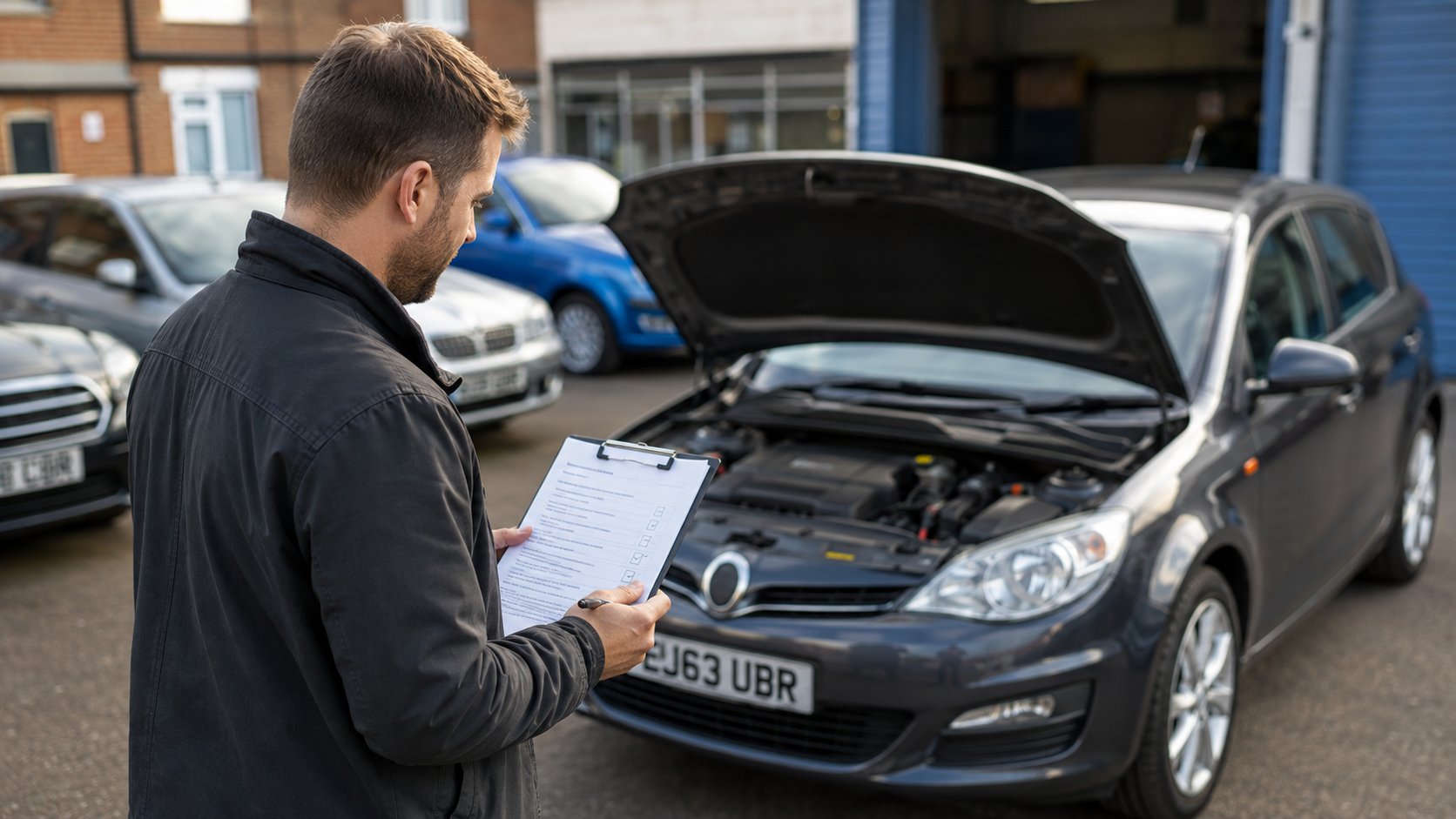
If you are buying from a dealer or private seller, check who will be named on the invoice or receipt. The buying routes come with different protections. See our guides to buying privately and buying from a dealership. Before committing, an independent vehicle inspection can help document visible condition and flag faults that need further testing. Check what the pre-purchase inspection service includes if there is a particular concern.
Compare the actual cars before making an offer
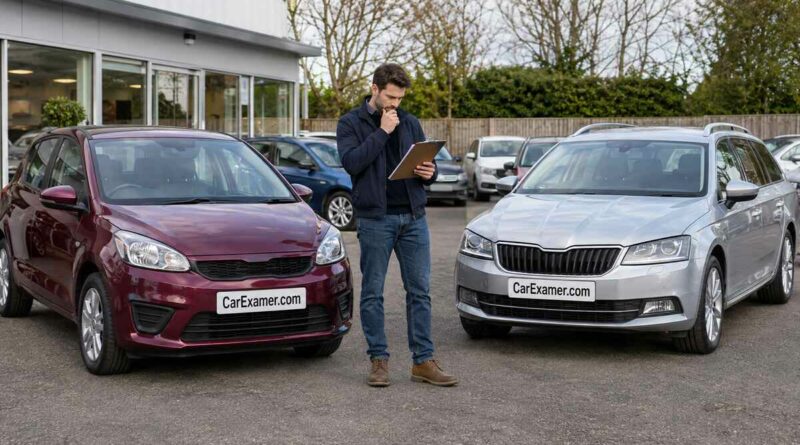
Put the finalists side by side. Record the price, immediate work, expected fuel, tax, insurance and any charges for the same year of use. Add scheduled maintenance and keep the repair reserve separate. If you plan to keep the car for two or three years, add the bills that fall due later and use a realistic resale value to compare the net cost.
Decide which items are firm and which depend on what a workshop finds. A scuffed bumper may have little effect on your use of the car. An unresolved cooling fault can change the repair budget substantially. If the decision turns on a single cost you cannot verify, get it confirmed or compare an alternative. Use our budget used-car buying guide when you view the cars you have shortlisted.