How to Buy a Cheap Used Car Without Overpaying
Estimated reading time: 8 minutes
A cheap used car is good value when it meets your needs, its history makes sense and you can pay for the work it is likely to need. Set a budget for the first year before you look at adverts. If you are buying your first car, get insurance quotes early and plan how you will collect it. The asking price is only one line in that budget. Insurance, tax, overdue servicing and a set of tyres can change which car is the cheaper option.
You will often have to accept a few cosmetic faults. Scratched paint on a bumper is easier to allow for than an unexplained coolant loss, recurring brake warning or corrosion around a suspension mounting. Sort what you find into cosmetic issues, work you can price and faults that need investigating before you commit.
Work out what you can afford to put on the road
Start with what you can spend during the first year, including enough money for repairs that may be needed soon after purchase. Get an insurance quote for the actual registration and check the tax rate. If you need to drive into an emissions charging zone, check the vehicle for the routes you use. The government’s clean air zone service covers participating English zones and links to separate checks for London and Scotland.
- List fixed costs such as insurance and tax, and estimate fuel from your normal journeys.
- Ask a local garage to price any immediate work, with parts, labour and VAT included.
- Check the handbook and invoices for work due by mileage or age. A recent oil change tells you little about when a timing belt or gearbox service is due.
- Keep a repair reserve for a fault that appears later. Plan for recovery or alternative transport if you depend on the car for work.
For example, a £2,500 car with £750 of immediate work costs £3,250 before you insure or tax it. A £2,900 car with £200 of work costs £3,100 on the same basis. The figures are illustrative. Use written quotes and the same assumptions for both cars so you know what you are comparing. Our guide to the full cost of buying and running a used car shows how to estimate fuel, compare finance and allow for resale value.
Shortlist cars that suit your journeys
Think about how the car will spend most of its time. For short urban journeys, check whether that engine and emissions system suit repeated cold starts and short running times. If you regularly travel on fast roads, look at how the car drives at normal speeds and whether its tyres and brakes are in sound condition. If you need an automatic or a specific seating layout, check that before viewing and get quotes for the correct engine and gearbox combination.
An older car with consistent servicing, matched records and a recent invoice for major maintenance can be worth considering even if the mileage is higher than another car’s. A low reading needs context. Ask how the car was used and how long it has been parked. A car that has stood for months can still need attention to its brakes, tyres or battery. Look for recent evidence of use and maintenance.
When buying from a private seller, you generally have fewer protections than you would with a trader. Establish who is selling the car and what will appear on the receipt. Citizens Advice has guidance on buying from a trader, a private seller or an auction.
Check the history before arranging a viewing
Ask the seller for the registration and mileage. Use the DVLA vehicle information service to check the make, first registration, tax and MOT information. The GOV.UK used car buying checks explain how to check recalls and compare the log book and vehicle identity at the viewing.
Use the CarExamer free MOT check or the official MOT history service to see how the readings and defects change over time. If a car fails on corroded brake pipes and later passes, ask which pipes were replaced and whether there is an invoice. If several tests mention underbody corrosion, ask for the location and whether a garage has assessed it. A recent MOT is useful evidence of the test result on that date. The car’s current condition still matters.
Consider a CarExamer vehicle history check for records such as outstanding finance, theft or a recorded insurance write-off. Check what the report covers and match the vehicle details. A history check can flag recorded events. You still need to examine the car for damage and make sure its identity matches the paperwork. If a key detail disagrees, resolve it before paying.
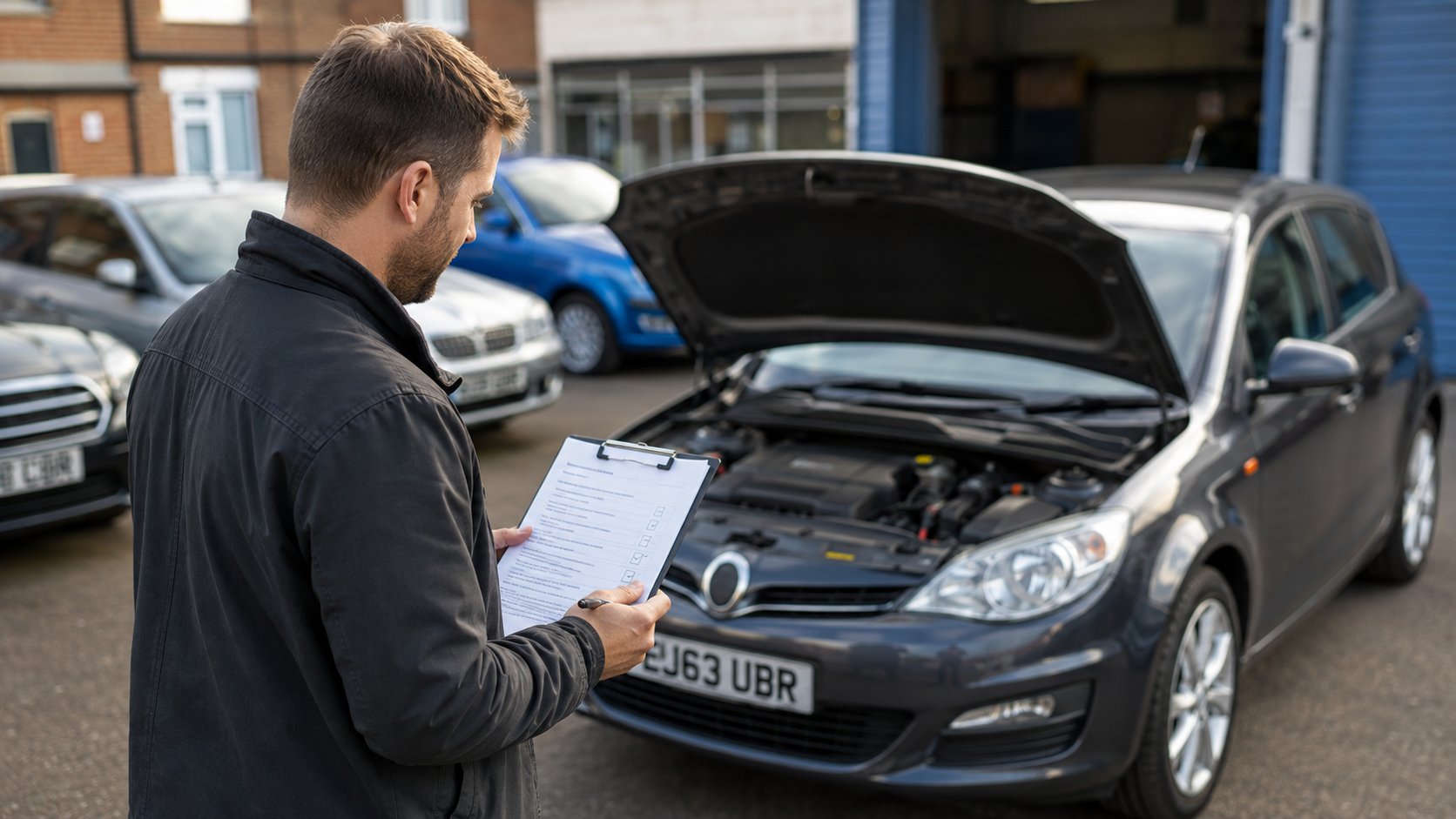
Inspect the car in daylight and ask to see it start cold
Arrange to see the car somewhere you can walk round it in good light. Ask the seller whether it can be left cold. A cold start can help reveal difficult starting, noises or warning lights that disappear once warm. If the engine has already been run, ask why and decide whether to view it again cold.
- Check the tyres for cuts, bulges and uneven wear. Look at the inner edges where you can see them safely. If several tyres need replacement soon, include the full fitted cost.
- Look at the sills, arches and visible jacking points. Paint damage may be cosmetic. Corrosion near a mounting point or an area you cannot see properly needs a closer look from a workshop.
- Check for visible signs of coolant or oil leakage. A fresh wash under the bonnet or a topped-up reservoir answers little about whether fluid is being lost. Ask about repairs and look for invoices. Leave the cooling system closed while hot.
- Try the windows, locks, heater, demister and air conditioning. If something you rely on fails, ask a garage to estimate diagnosis and repair before making an offer.
- Follow our roadworthiness guide for the checks you can make while the car is parked and the symptoms that should stop a test drive.
Photograph or write down findings with the seller’s permission. Recording the exact warning or the position of a damaged tyre makes it easier to compare cars and get a meaningful quote. If the car has a suspected safety fault, leave it parked and arrange a suitable professional check.
Look at what you can verify about recent repairs. An invoice with the registration or VIN, date, mileage and parts fitted can clarify whether a seller’s claim about a new clutch or cambelt applies to this car. Ask about missing service history before assuming the work was done. Where an important job cannot be verified, use the manufacturer’s schedule and get the work priced as a possible expense.
Use a normal test drive to check for symptoms
With the seller’s permission and suitable insurance, take a route that allows ordinary pulling away, steering and braking. Watch how an automatic selects drive or reverse and shifts as the car warms. On a manual, pay attention to whether it selects gears smoothly and whether the clutch slips in normal driving. A delay, jolt or noise gives you something to describe to a garage. It can have several possible causes.
Check whether a warning reappears after starting, whether the steering feels consistent, and whether the brakes respond normally. If something serious develops, stop safely and get assistance. A short drive can help you spot a symptom, but hidden damage and intermittent faults may need different checks. An independent vehicle inspection can document visible condition and help identify what needs a specialist diagnosis. Check the pre-purchase inspection options against the car’s condition and the access the seller will allow.
Decide whether to buy, negotiate or walk away
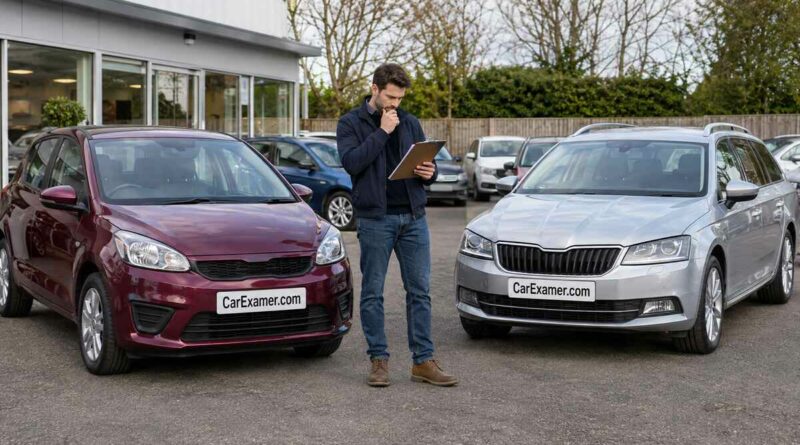
Write down the purchase price and a realistic total for the first year. Compare that figure with another car you could actually buy. A cracked wheel trim or an upcoming service can often be accounted for in the price. An unexplained overheating episode, a mismatch in the vehicle identity or uncertainty about structural corrosion needs an answer before you commit.
Ask for any promised repair to be agreed in writing and check the result before collecting. Make sure you have the paperwork and the correct keys, and arrange insurance and tax before you use the car on the road. If the seller rushes you or you cannot establish what a serious fault will cost, allow yourself time to look elsewhere. The CarExamer car buying guides cover the next steps from viewing to collection.
A budget car can be a sensible purchase when you understand which costs are coming and still have money to deal with them. Use your notes from the viewing to decide which flaws you can live with and what would make the deal too expensive for you.