How to Buy a Used Car Safely in the UK
Estimated reading time: 6 minutes
The safest way to buy a used car is to confirm the seller, match the car to its records and check its condition before paying. Arrange the viewing in daylight and allow enough time to read the paperwork and ask questions. If the seller will not show the car or explain a mismatch in the documents, pause. A low asking price or a deadline to pay does not make those checks any less important.
Think about your safety during the appointment as well as the condition of the car. Tell someone where you are going, take someone with you if you can and arrange any test drive before travelling. If you are buying remotely, make sure you know who is selling, what you have committed to and who can examine the car on your behalf.
Verify the seller before travelling
Ask who will sell the car and take payment. With a dealer, check the trading name, address and phone number independently of the advert. Call the number you found to confirm the car is there. Ask which business will appear on the invoice. An online marketplace may introduce you to the seller without being responsible for the transaction. See our guide to used car dealer warning signs for what to do if the paperwork or price changes.
For a private sale, arrange to see the car at an address you can verify and ask the seller to explain their relationship to the vehicle. The V5C names the registered keeper. It does not establish ownership by itself, so seek further evidence if somebody else is selling it. Use our guide to different ways to buy a used car to compare what changes when you buy from a trader, a private individual or through a marketplace.
Save the advert and contact details. If the meeting location changes shortly before the viewing, or someone asks you to pay into a different account, verify the explanation before going or paying. Our used-car seller warning signs guide explains which discrepancies call for a pause.
Compare the documents and history with the advert
Ask for the registration, model, mileage and service history. Follow the GOV.UK used vehicle checks for DVLA information, the MOT record and recalls. Compare mileages across dates and check for repeating advisories. A current pass is useful context. If the same issue appears repeatedly, ask whether it was investigated and what work was done. You can review the results with our free MOT check.
A separate car history check can identify recorded theft, write-off or finance information within its coverage. Read any flags before spending money on a viewing or inspection. If finance is showing as outstanding, establish who can sell the car and how the lender will be paid before you give the seller money. Ask for verifiable evidence, particularly if the seller says the loan has already been settled.
At the appointment, match the VIN on the vehicle with the V5C and the history records. Use the CarExamer V5C guide if you are unsure what to compare. Ask whether the service and repair invoices identify the same car, and look at the mileage and dates on each. If a mismatch cannot be explained, stop before paying.
For example, if an advert gives a different mileage from a more recent MOT, check the registration and VIN first. Ask the seller for a dated explanation and supporting documents, such as an invoice for a replacement instrument cluster. A recording error can happen. You still need enough evidence to understand what mileage the seller is asking you to rely on before you agree a price.
Plan a safe viewing and test drive
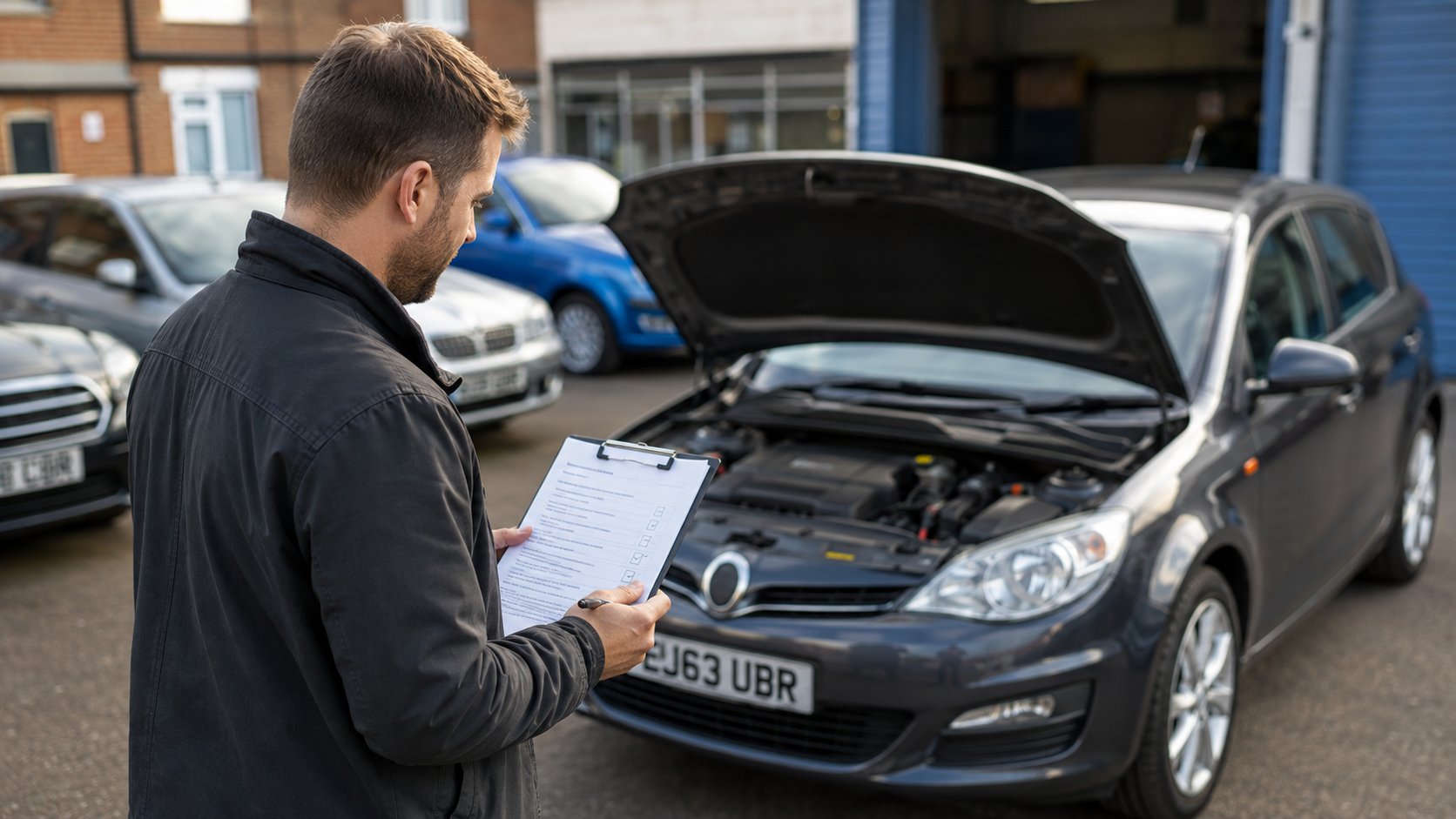
Agree the time and location in advance. Aim for daylight and enough space to walk around the car. If you are meeting a private seller, take another person if possible and let someone know the address and when you expect to finish. Avoid carrying a large sum of cash to an appointment.
Ask whether a test drive can take place and make sure you have the seller’s permission and suitable insurance. Check the car is road legal and safe before driving. If you find visible tyre damage, a serious warning light or a brake concern, ask for an assessment and leave the car parked. If you feel unsafe at the appointment, leave.
Agree a route you can drive comfortably. A short trip that includes normal starts, stops and manoeuvres is more useful than being hurried around a car park. If you need to know how the car feels on a faster road, ask whether that can be included safely. Avoid trying to reproduce a dangerous symptom on the road.
Inspect the condition and ask for evidence of repairs
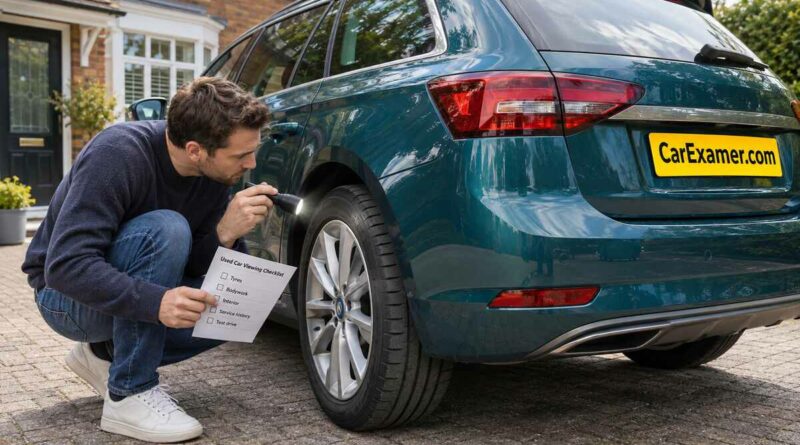
Compare panels, glass, wheels and paint in daylight. Look for uneven wear, fluid beneath the car and obvious damage. Check what happens when the car starts and whether warning lamps behave as the handbook describes. Try the locks, windows, lights, demisting and any equipment the seller has added to the description. Check both keys if the advert says there are two.
If you notice a noise or vibration, record when it happens and how the seller explains it. A repeated clunk may be useful evidence, but the part and repair cost still need to be established. If the seller says an advisory has been repaired, ask for the invoice and confirm that the work matches the item in the MOT record. Our used-car viewing checks cover what to inspect while you are there.
If you are buying unseen or need more evidence, arrange a vehicle inspection. Compare the available CarExamer packages and confirm access with the seller. The report can document condition at the appointment and identify areas that need further testing. Get workshop advice if damage or a warning cannot be assessed properly at the viewing.
Put payment, deposits and part exchange in writing
Before you pay, ask whether a deposit reserves the car or commits you to a sale. Get the refund terms and any conditions in writing. Agree the total price and record repairs or missing items the seller has promised to deal with. Check the invoice includes the correct car, seller and amounts.
For a bank transfer, confirm the payment details through a trusted contact route and investigate any mismatch before sending money. If the seller requests a last-minute transfer to a different account, call back using independently verified details. Keep payment evidence. If you suspect fraud after sending money, contact your bank promptly and follow the official shopping fraud advice.
For eligible credit-card purchases, Section 75 may apply even if you paid only part of the price by credit card. MoneyHelper explains the price limits and why the payment arrangement matters. If you are using finance, compare the total amount payable and check when the agreement starts. For a part exchange, ask for a written breakdown showing the trade-in value, any outstanding finance settlement and the final balance.
Know who to contact if something goes wrong
A trader sale and a private sale are covered by different rules. Citizens Advice’s used-car buying guidance explains the checks and links to advice for different parts of the UK. If the dealer sells fully remotely, see our online car-buying guide for how the way the contract was made affects cancellation rights.
If you discover a fault, record the date, mileage and symptoms and contact the seller promptly. Tell the finance provider if it supplied the car. If the fault affects safety, stop using the vehicle and discuss recovery. Keep messages, paperwork and any repair evidence so you can show what was agreed and what happened.
If the seller has agreed to fix something before collection, record the exact work, any parts to be replaced and how completion will be confirmed. At handover, check the invoice and test the relevant equipment where it is safe to do so. Ask for an updated collection date if the work has not been completed.
Decide before you hand over the balance
- Match the seller, car and paperwork. Resolve anything you cannot verify.
- Ask for evidence of work, diagnose material faults and get quotations for known repairs.
- Confirm the final price, deposit terms, keys and agreed paperwork in writing.
- Photograph the car’s condition and mileage at handover and save your receipt.
- Make sure insurance and tax are in place before you drive away.
If you are buying from a distance, agree how you would record discrepancies at delivery and when you become responsible for the vehicle. Ask who will collect it if the wrong car arrives or the seller agrees a return. A verbal promise is difficult to use if the person who made it is unavailable.
A car is ready to buy when the documents agree, its condition suits your use and the price leaves room for the work it needs. If a safety concern or an identity issue is still open, reschedule the handover or choose another car.