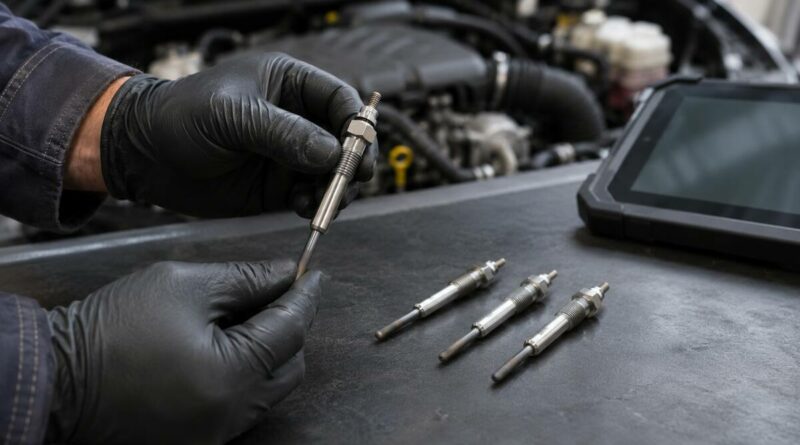
Glow Plug Warning Light: Causes, Checks and Driving Advice
A glow plug warning light is usually normal for a short time before starting a diesel engine. If the coil symbol stays on after starting, appears while driving or flashes, check the handbook and arrange diagnosis. On some vehicles the same symbol also reports wider engine management faults, so replacing the glow plugs without testing can waste money and leave the actual problem unresolved.
The useful questions are when the light appeared, whether it was steady or flashing, what message accompanied it and how the engine behaved. Those details help a technician choose the right tests. They also matter when assessing a used diesel before purchase, particularly if a seller describes a warning as an inexpensive part without supporting evidence. For other symbols that appear alongside the coil, see our guide to dashboard warning lights.
When the glow plug light is normal
Diesel engines ignite fuel through heat generated by compression. Glow plugs provide additional electrical heating to support combustion, especially during a cold start. The dashboard coil symbol commonly shows that the preheating stage is operating. Follow the starting sequence in your vehicle’s handbook rather than using a universal countdown.
For example, Ford’s warning-light guidance tells drivers to wait for the glow plug indicator to go out before starting. Some push-button systems manage that delay automatically. The duration depends on the design and operating conditions; a brief display in warm weather does not establish a fault.
What a steady or flashing light can mean
The meaning changes when the lamp remains illuminated with the engine running. Volkswagen explains that its glow plug/diesel engine management lamp indicates an engine management fault if it stays on or flashes during operation. Its advice is to drive slowly and carefully to an authorised repairer without delay and have the engine checked.
That guidance should not be applied blindly to every manufacturer or every symptom. Read the handbook for the exact model and any accompanying display message. A flashing coil does not, by itself, identify a failed plug, prove a blocked diesel particulate filter or mean that total power loss is inevitable.
Possible causes requiring diagnosis
A fault can lie in the heating components, their electrical supply or a wider monitored engine system. The technician should use the vehicle’s fault information and test procedure to narrow the possibilities. Potential areas include:
- A glow plug with an electrical or heating fault.
- A faulty control module, relay or supply circuit, depending on the system fitted.
- Damaged wiring, poor connections, corrosion or an unsuitable previous repair.
- Incorrect temperature information affecting the control strategy.
- Another engine management concern where the manufacturer uses the coil lamp for broader fault reporting.
The last category is why parts should not be ordered from the dashboard symbol alone. A code referring to a cylinder’s glow plug circuit can still require checks of wiring, supply and control. A code is evidence of a detected condition, rather than a guaranteed instruction to replace the named component.
Symptoms to record before the garage visit
Note whether the problem happens only after an overnight stop, during acceleration, at idle or once the engine is warm. Record difficult starting, rough running, smoke, unusual noise and reduced power. A photograph of the instrument display taken while stationary can preserve the exact warning and message without relying on memory.
Starting problems are not exclusive to glow plugs. Battery condition, cranking speed, fuel delivery and mechanical condition can produce overlapping symptoms. If the engine turns slowly, our guide to starter motor operation and starting checks explains why the battery, connections and starter need consideration together.
Can you keep driving?
Decide from the manufacturer’s instruction and the vehicle’s behaviour. If the handbook permits a cautious journey for an amber warning and the car runs normally, arrange prompt assessment and avoid hard acceleration, towing or unnecessary travel. Reduced power can make joining traffic or overtaking unsafe even when the engine still runs.
Stop safely and obtain assistance if the car overheats, develops heavy smoke, runs severely roughly, makes a serious mechanical noise or shows a red oil-pressure or temperature warning. Do not continue simply because the coil symbol is amber. If you cannot maintain a safe speed or the handbook says to stop, recovery is the appropriate next step.
Two illuminated warning lamps do not establish overheating. Temperature warnings, coolant information and physical symptoms must be assessed separately. Do not open a hot cooling system or repeatedly restart an engine displaying a serious warning.
What proper diagnostic work involves
A useful assessment starts with the complaint, service history and a scan of the relevant control units. The technician should preserve codes and available freeze-frame information before clearing anything, distinguish current faults from stored history and compare live readings with the manufacturer’s expected values.
- Confirm the exact engine and glow plug specification.
- Check battery supply, relevant fuses, wiring and connectors.
- Test the plugs and control outputs using the correct procedure.
- Investigate related engine faults instead of treating the lamp in isolation.
- Verify the repair under suitable conditions and check for returning faults.
Modern plugs can use different voltages and control strategies. Do not apply battery voltage as a casual bench test. Incorrect testing can damage a component. Our car repair and diagnosis guide explains what to request in a diagnostic report and repair quotation.
Glow plugs do more than help winter starting
NGK’s technical overview describes their role in cold starting, stable warm-up idle and emissions control. Depending on the engine design, heating can continue after starting. The lamp going out does not necessarily mean every heating function has stopped.
NGK’s January 2025 technical feature also explains how modern glow plugs can support particulate-filter regeneration. This does not mean a coil warning instructs you to perform a high-speed regeneration drive. Follow the vehicle’s specific DPF instructions and obtain diagnosis when other warnings or faults are present.
Replacement costs and removal risks
Ask for a written quotation based on the exact engine, diagnosis and access. A plug’s purchase price is only part of the bill. Some engines require substantial access work, and seized or damaged plugs can need specialist extraction. A control fault or wiring repair has a different cost from replacing a set of plugs.
NGK advises following removal and installation instructions, cleaning deposits where required and using the correct tightening torque. Ask whether the quotation covers diagnosis, parts, labour, VAT and any extraction contingency. Agree how the garage will contact you if removal becomes difficult. Avoid treating replacement as a simple universal DIY job.

Will a glow plug warning fail the MOT?
Normal preheating before starting is different from an engine malfunction indication. The DVSA MOT manual requires the engine malfunction indicator lamp to be checked on applicable diesel vehicles first used on or after 1 July 2008. An inoperative lamp or one indicating a malfunction is a major defect under that inspection item.
A glow plug symbol is not automatically the emissions MIL on every vehicle. Its function and the applicable test requirements matter, so avoid blanket pass-or-fail promises. A recent MOT also does not establish that an intermittent fault has been repaired. Review our guide to MOT findings before buying alongside the current condition.
Checks before buying a diesel with this warning
Request a cold start, observe the lamp sequence and ask for diagnostic and repair evidence. A restart that temporarily removes the warning does not prove a repair. Check the car again during an appropriate road test and ask whether fault codes were recently cleared. Record any restriction that prevents a proper assessment.
An independent vehicle inspection can document accessible condition, warning behaviour and diagnostic findings within the selected inspection scope. Specialist electrical testing or dismantling may still be needed. Resolve significant uncertainty before paying instead of accepting an unsupported promise that the repair will be cheap.
Can I clear the warning with a code reader? Clearing codes can remove useful evidence and does not repair the cause. Save the report first and have the fault investigated. If the lamp returns only in particular conditions, the garage may need to reproduce those conditions safely.
Should every glow plug be replaced together? NGK generally recommends replacing the set because similarly aged plugs may be approaching the same stage of wear. The repair decision should still consider the test results, correct specification, access and extraction risk. Replacing a set will not correct a failed supply or control module.
Why does the car start normally despite the warning? Mild weather can reduce the obvious effect of a heating fault, while a wider engine management fault may not affect starting. Normal starting therefore does not establish that the system is healthy. Assess the stored information and the symptom under the conditions in which it occurs.
When comparing a repair quotation, request the original fault description, confirmed test findings and proposed work separately. That makes it easier to understand what has been diagnosed and what still needs investigation before authorising a repair.