How to Buy a Car at Auction: Checks, Fees and Bidding
Estimated reading time: 8 minutes
To buy a car at auction in the UK, check that you are eligible to bid, study the exact lot, calculate the total cost and arrange collection before you make an offer. The winning bid is only one part of the price. Buyer fees, VAT where applicable, transport and work needed to make the car usable can change the result considerably.
Auctions can be a useful way to buy when you understand the terms and can judge the evidence. An attractive photograph and a low starting bid are poor substitutes for access, clear records and a realistic repair allowance. If you cannot answer those questions before bidding, leave the lot and look for another car.
Choose the auction and check who can bid
Find out whether it is a physical sale, a live online auction, a timed auction or a sale open only to qualifying account holders. Operators apply different registration requirements, account conditions and eligibility rules. A site you can browse is not necessarily a sale you are allowed to enter. For example, check Manheim’s registration information and the terms for the particular sale if you are considering its platform.
Understand how bidding works, including proxy or maximum bids, deposits, reserve prices and provisional sales. A high bid below reserve may need seller approval. Check when your bid becomes binding and what confirmation you will receive. Register and complete any required checks in good time so you are not working through unfamiliar screens with seconds to spare.
Watch a sale first if the process is new to you. Pay attention to how the operator announces amendments, confirms final prices and communicates with buyers. If several similar cars are listed, keep their lot numbers and registrations separate.
Read the lot description and sale terms together
Download or save the catalogue listing, condition report and material announcements before bidding. Confirm the registration, mileage, engine, gearbox and equipment. Check what the operator says about documents, keys, condition grades, warning lights and whether the car can be moved. Note which statements come from the seller, which checks were actually performed and which items were outside scope.
Read any policy for discrepancies and check the reporting deadline and exclusions. Conditions can vary by sale, seller and type of buyer. The Consumer Contracts Regulations include an exception for contracts concluded at a public auction as defined in the regulations. An online-only auction is not automatically treated the same way. Identify the legal seller, your status and the sale format before relying on rights or remedies.
An auction condition report can be useful. Read its definitions and limitations before treating it as a comprehensive mechanical assessment. A statement that a car starts may cover only the time and circumstances of that check. It does not tell you whether it drives correctly under load or is safe to use on the road.
Check the vehicle’s history before it reaches the lane
Use the registration to compare the catalogue details with available records. The CarExamer free MOT check and DVLA used-car buying guidance can help you review mileage, test results and vehicle information. Look for recurring advisories, gaps and material discrepancies. A valid MOT records specified checks at a point in time and is not a guarantee of present condition.
Check whether the car has a recorded insurance category, outstanding finance or missing documents. A clear database result does not rule out an unrecorded repair. An insurer’s category concerns the recorded loss and the type of damage. Establish whether the car can lawfully return to the road and what evidence of repairs and condition exists. Our guide to insurance write-off categories explains the distinctions.
Compare the exact model and version against similar vehicles elsewhere. A retail asking price can include preparation and consumer protections that differ from the auction arrangement. Use comparable condition and costs rather than treating the highest visible retail listing as the car’s value.
Inspect what the auction permits
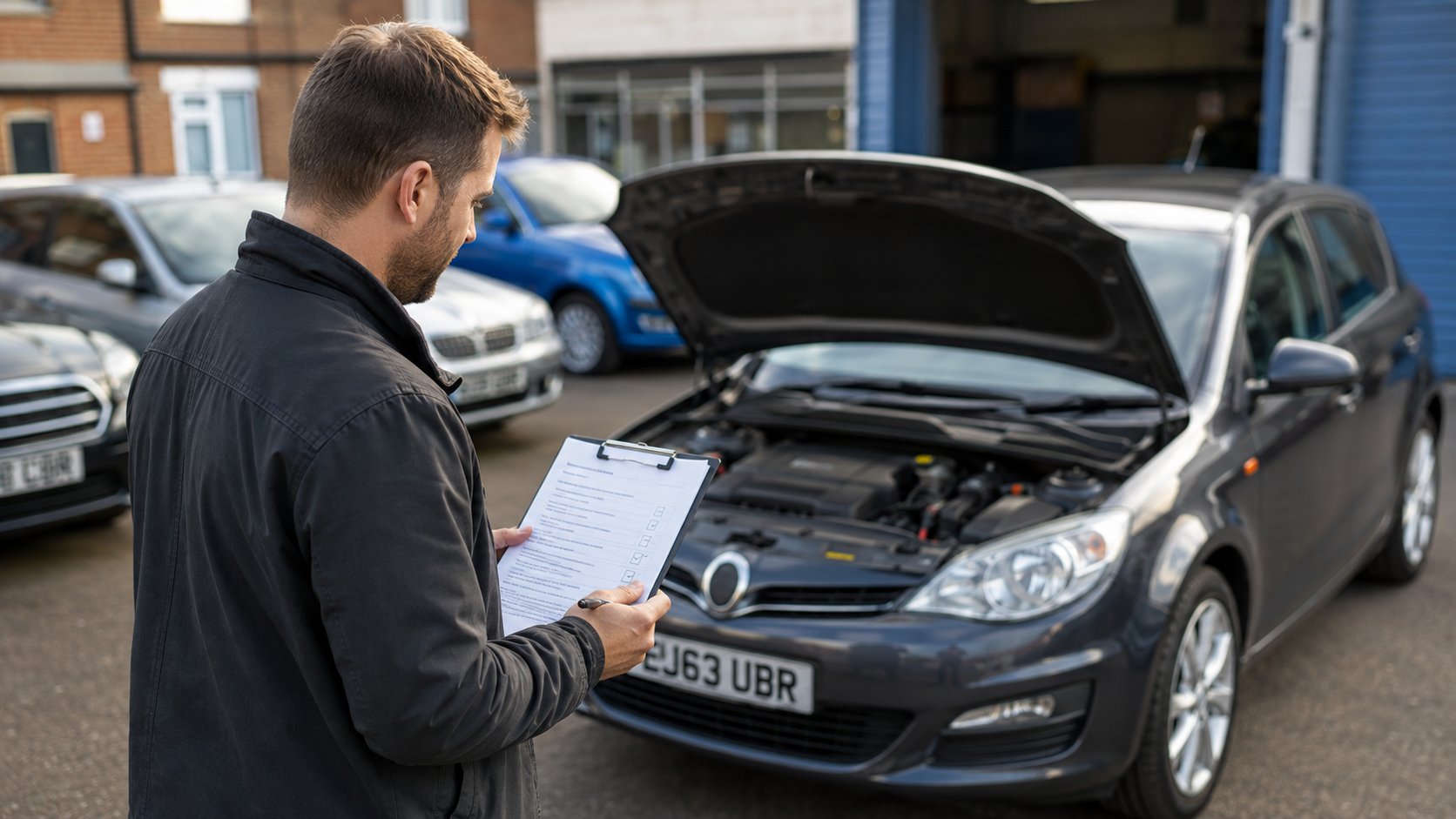
Ask whether someone can view the vehicle before the sale and what checks are allowed. You may be able to look around the car but not start it, connect diagnostic equipment or take it out on the road. Establish this before paying for an assessment or travelling. If a door, bonnet or underbody is inaccessible, record that limitation rather than assuming it is sound.
Look for clues in the areas you can see:
- Tyre condition, visible damage and wheel size.
- Panel alignment, paint differences, corrosion and broken trim.
- Warning messages, missing keys or security equipment, where those checks are available.
- Visible leaks or damage visible from a permitted position.
- Condition and equipment that differ from the catalogue photos or description.
If you want a vehicle inspection, first check that the operator permits it and confirm the agreed access and scope. Review the CarExamer inspection options and ask what can be assessed at that location. A short viewing is useful for deciding what remains uncertain. If a significant risk cannot be priced or checked, declining to bid is a reasonable decision.
Decide in advance which missing checks will rule out a bid. For example, if the report lists a transmission warning and there is no road test or diagnosis, you cannot reliably turn that into a small fixed repair allowance. Price any known work separately from the uncertainty around the fault. The larger the unverified exposure, the harder it is to compare the lot with a car you can test.
For an electric car, ask whether the charging equipment is present, whether the vehicle can be charged and what evidence is available for the battery and warning messages. A displayed range estimate depends on several factors and does not show the battery’s remaining capacity on its own. If the site cannot support the checks you need, consider an example with better access.
Calculate the maximum bid from the complete cost
Use the auction’s current fee schedule for your buyer status and expected price band. Manheim’s buying-cost guide and Copart’s buying fee information illustrate why you need operator-specific figures. Depending on the sale, check buyer fees, online charges, VAT, membership, transport and storage, plus repairs or maintenance known to be due.
For example, if you can spend £7,000 in total and expect £500 in auction charges, £250 for transport and £650 for initial work and uncertainty, that leaves £5,600 for the bid. These are example figures. Recalculate if the operator’s fees change at a threshold or if you discover a cost you have missed. Check which amounts include VAT.
Compare the total with alternatives from other sellers. Our guide to different ways to buy a used car explains how to compare auction, private and dealer offers. A low bid may still make poor sense if the car cannot be assessed adequately or the final cost approaches that of an example with better evidence.
Follow the lot and stick to the limit
Confirm the lot number and watch for late changes to the description. Bid only when you understand the amount and what the platform will do if you are successful. Avoid following another buyer past your limit just because the price increased in small steps. The limit belongs to this car and its evidence, not to how keen the other bidders appear.
If a bid is provisional, follow the terms and get the accepted amount and charges confirmed. If you win, check the invoice against the lot and fee schedule before sending payment. Verify payment details through the operator’s trusted channel if anything differs from the written instructions.
Pay, collect and check what you received
Arrange payment and collection within the operator’s deadlines. Check where the car is stored, whether a transporter needs an appointment and when storage fees begin. Confirm what documents, keys and accessories will be handed over. Keep the invoice, catalogue, photographs and release paperwork together.
Before driving away, establish that the vehicle is roadworthy and that the necessary tax, insurance and MOT requirements are met. If it cannot safely or lawfully be driven, use suitable transport. At handover, record the mileage and condition and report any material discrepancy through the operator’s procedure promptly. Check the allowed reporting period before moving or repairing the car.
Keep a copy of any written description you relied on and record discrepancies before commissioning work that may change the evidence. A dated set of photographs at collection is more useful than trying to reconstruct the car’s condition several days later.
The best auction purchase is a car you would still choose after adding all the costs and considering what you could verify. Set those limits before bidding, and use them even when the sale moves quickly.